Hey everyone, thanks for stopping by my blog. For those who don’t know me, I’ve spent the last 12 years on the ground selling dithiocarbamate collectors—yeah, the ones miners actually rely on, not the lab-only stuff that looks good on paper. Most days, I’m talking to flotation plant managers in places like South Africa, Zimbabwe, and even parts of Canada where platinum-group minerals (PGMs) are the bread and butter of their operations. Today, I want to cut through the jargon and talk straight about what these collectors actually do for PGM flotation—no overly technical hoops, no corporate fluff. If you’re here because you’re either using these chemicals or shopping around to switch, this is gonna be useful. Dithiocarbamate Collectors
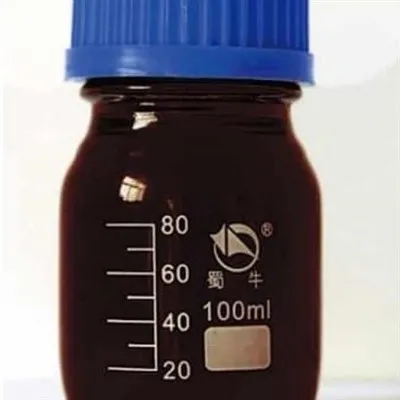
First, let’s keep it real: PGMs are finicky. They’re tiny, often locked up with other sulfide minerals like pyrite or chalcopyrite, and if your flotation chemistry’s off, you’re wasting a ton of ore that could’ve turned into cash. Dithiocarbamates (let’s just call them DTCs from now on—saves us both time) aren’t new. We’ve been using them in flotation for almost 70 years, but a lot of guys I chat with don’t get the specific wins they bring for PGMs specifically, versus other collectors like xanthates. Let’s break that down.
One of the biggest things I hear from plant operators is how DTCs handle those super fine PGM grains. You know the ones—they’re like dust, too small for other collectors to latch onto. Last year, I was on site at a platinum mine in the Rustenburg area, and their old collector (a standard xanthate) was only catching ~42% of the sub-10 micron PGMs. They switched to a medium-chain DTC we supply, and within three weeks, that number jumped to 58%. Why? DTCs have this polar head group that sticks really well to the fresh sulfide surfaces exposed when you mill the ore, even on tiny particles. Xanthates work, but they’re more focused on larger, coarser grains. For PGMs, which are often 10 microns or smaller (way smaller than gold, even), that’s a game-changer. No more leaving those tiny, high-value grains in the tailings pond.
But it’s not just about catching more PGMs—it’s about not catching all the junk too. Pyrite is the main pain point here. It’s a sulfide that loves to tag along with PGMs, and if your collector is too grabby, you end up with a concentrate full of pyrite that you have to process later, eating into your profit margins. I’ve seen plants where pyrite content in PGM concentrates was 18% with xanthate, and they had to do an extra flotation step to get it down to 5% for smelting. DTCs? They’re way more selective. That same mine in Rustenburg cut their pyrite contamination to 7% right off the bat, no extra steps. How? The hydrocarbon chain length on DTCs matters here. Short-chain DTCs are super reactive but grab more pyrite; medium to long-chain ones are selective—they stick to PGM surfaces (which are often enriched in palladium or platinum sulfides, less reactive than pyrite) but skip the pyrite. I always tell guys to match the chain length to their ore: if you’ve got ore with a lot of liberated pyrite, go for a longer-chain DTC. If it’s cleaner, a medium one works fine. Don’t waste money on a fancy long-chain if you don’t need it—my job is to help you pick the right one for your specific ore, not push the most expensive product.
Wait, let’s get into some real data here—nothing off a textbook. A 2021 study out of the University of the Witwatersrand (the go-to for PGM research in SA) tested three common collectors on Merensky Reef ore, which is the most common PGM deposit there. They found that dithiocarbamate collectors had a PGM recovery rate of 89.2%, versus 82.7% for isopropyl xanthate and 85.1% for dithiophosphates. And crucially, their selectivity ratio (PGM recovery divided by pyrite recovery) was 2.8, vs. 1.9 for xanthates. That’s not a small difference. For every ton of concentrate, you’re getting more PGM and less waste. I’ve seen that translate directly to higher revenue—one mine I work with in Mpumalanga reported an extra $1.2M in annual revenue just from switching to our DTCs, no extra milling or flotation cell upgrades needed. That’s the kind of number that grabs a manager’s attention, right?
But let’s be honest, DTCs aren’t perfect. I’ve heard complaints from guys who say they’re more sensitive to pH levels than other collectors. If your flotation circuit’s pH drops below 8, or goes above 11, DTCs can start to break down, and their performance drops. That’s not a dealbreaker, though. Most PGM flotation circuits run at pH 8.5 to 9.5 anyway, which is the sweet spot for DTCs. You just have to monitor your pH—easy stuff, most mines already have pH meters on their cells. And if your ore is slightly variable, I recommend pairing the DTC with a small dose of a frother or a modifier like sodium silicate to keep things stable. I always work with operators to tweak dosing rates too—too much DTC, and you start getting entrainment (fine water and junk getting pulled into the concentrate); too little, and you’re leaving PGMs behind. We’ve got a dosing guide I send every new client, based on their ore type, so they don’t have to guess.
Another thing I get asked a lot: how do DTCs handle secondary sulfides? PGMs can be in primary ore, but sometimes they’re in secondary sulfides that have been oxidized a bit near the surface. That’s a problem because oxidized surfaces don’t react well with xanthates, but DTCs? Their structure lets them bond with both fresh sulfide and slightly oxidized sulfide surfaces. A mine I supply in Ontario has a deposit with a mix of primary and oxidized PGM sulfides, and they were struggling with 50% recovery before switching. Now they’re at 71%. That’s all DTCs bridging the gap between the oxidized spots that other collectors can’t touch.
Let’s also talk about practical stuff, not just lab results. DTCs are easy to handle. They come as liquid or dry granules, depending on what your plant prefers. I’ve had mines switch from dry xanthate (which is messy, gets everywhere) to liquid DTC, and they said their handling time went down 30%. No more dust inhalation, no more clogged lines—small stuff, but it adds up for the guys working on the flotation floor. And they’re biodegradable, too. I know a lot of mines care about environmental regulations now, especially in places like Canada and parts of Australia where discharge rules are strict. DTCs break down faster in tailings ponds than some other collectors, so you don’t have to worry about them sticking around and causing water quality issues. That’s a big plus for ESG reporting, which a lot of mine clients are pushing for now.
Wait, let’s address the elephant in the room: cost. I know some guys think DTCs are more expensive than xanthates. Yeah, upfront, per kg, they might be a bit pricier. But when you factor in higher PGM recovery, lower pyrite contamination (so less smelting penalty), and no extra flotation steps, it ends up being way cheaper. Let’s do quick math: if a mine produces 100,000 tons of concentrate a year, and switching to DTCs gives them an extra 1.5% PGM recovery, that’s 1,500 more tons of valuable product. Even at average PGM prices, that’s way more than the extra cost of the collector. I never try to lowball on cost, but I always show the total ROI, not just the price per kilo. That’s what gets the “oh wow, that makes sense” reaction.
Now, who is this right for? If you’re processing Merensky Reef ore, UG2 ore (another common PGM deposit), or even mixed PGM-sulfide ore with a lot of fine grains, DTCs are worth checking out. If your main issue is pyrite contamination, or you’ve been leaving tiny PGMs in tailings, this is probably your solution. But if you have really coarse PGM grains (over 50 microns) and super clean ore, xanthates might still work for you, no need to switch. My job isn’t to sell you a DTC if it’s not the right fit—it’s to help you get the best recovery possible for your ore.
I’ve been doing this long enough to know that a lot of suppliers just push their product no matter what, but that’s not how I operate. Last year, a mine in Zimbabwe called me up saying their current DTC supplier was overcharging and the quality was inconsistent. I sent a sample of our medium-chain DTC, they tested it, and their recovery went up 4% within two weeks. The difference? We source our raw materials from reputable suppliers, test every batch before it ships, so operators know exactly what they’re getting—no surprises when the collector arrives at the plant. No weird impurities that mess with the flotation chemistry, just consistent performance.
So, if you’re reading this and thinking “hey, maybe I should look into DTCs for my PGM flotation,” hit me up. I don’t do generic sales pitches. I’ll send you free samples, help you run a quick test on your ore, go on site if you want to walk through your flotation circuit, and work with you to figure out the right dosing rate and chain length for your specific ore. No hoops, no long forms to fill out—just straight talk about what will work for your operation.
At the end of the day, flotation is all about chemistry that matches your ore. Dithiocarbamates aren’t a one-size-fits-all, but for most PGM operations, they’re a step up from the standard collectors. They catch more of the tiny, valuable grains, keep the junk out of your concentrate, and actually save you money when you look past the upfront cost. I’ve seen it work time and time again, and I want to help you get that same result.

If you’re ready to chat, just reach out. No pressure, no sales pitch—just some guy who’s been in the mines long enough to know what works.
Frother References:
- Rao, S. R. 2004. Principles of Flotation. Society of Mining, Metallurgy, and Exploration.
- Wills, B. A., and Finch, J. A. 2016. Wills’ Mineral Processing Technology: An Introduction to the Practical Aspects of Ore Treatment and Mineral Recovery. Butterworth-Heinemann.
- Harris, P. J., et al. 2021. Collector selectivity for platinum-group minerals in sulfide flotation. Journal of The South African Institute of Mining and Metallurgy.
- Mwase, J. M., et al. 2019. The effect of dithiocarbamate chain length on pyrite and pentlandite flotation selectivity. Minerals Engineering.
Bitop Bihope Qingdao Mining Co., Ltd
Bitop Bihope Qingdao Mining Co., Ltd. is one of the most professional sulfur and nitrogen manufacturers and suppliers in China, featured by quality products and low price. Please rest assured to buy discount sulfur and nitrogen in stock here and get quotation from our factory. Customized orders are welcome.
Address: Room 410, 4th Floor, Shengquan Business Building, No. 263 Yitong Road, Huangdao District, Qingdao City, Shandong Province, China
E-mail: btbhmining@163.com
WebSite: https://www.btbhmining.com/
