If you’ve ever driven through a residential neighborhood or parked near a commercial strip, you’ve probably walked past a pad mounted transformer—those quiet, gray, boxy units sitting on concrete pads, humming steadily as they step down high-voltage power from the grid to safe, usable electricity for homes and businesses. I’ve been supplying these units for over 12 years now, and one of the most common questions I get from installers, electricians, and even property managers isn’t about wattage or size—it’s about grounding. It’s easy to see grounding as a afterthought, a box to check before flipping the switch, but it’s actually the non-negotiable core of safe, reliable operation for pad mounted transformers. Skip the right grounding, and you’re not just risking equipment damage—you’re putting people at danger from electric shock, fire, or even grid outages that take down entire blocks. Today, I want to break down the real grounding requirements we stand by as a supplier, from code mandates to site-specific details, because getting this right isn’t just good practice—it’s how we keep the power on and everyone safe. Pad Mounted Transformers

First, let’s start with the basics: why grounding for pad mounted transformers is different from other types of transformers. Unlike pole-mounted units that hang high off the ground, pad mounted transformers are low to the ground, often in public-facing areas like sidewalks, parking lots, or backyards. That means they’re far more accessible to people, pets, and vehicles—so any fault current (the surge of electricity that happens when a live wire touches a grounded part of the unit or the ground) needs a clear, quick path to dissipate, rather than building up in the transformer’s metal casing or the soil around it. Fault currents can get intense—sometimes thousands of amps—within milliseconds, and if they can’t find a safe route, they’ll arc to the nearest conductive surface: a person’s hand touching the transformer, a metal fence nearby, or even a wet patch of soil. That’s why grounding isn’t just about protecting the transformer—it’s about protecting anyone who might come near it.
Now, let’s get to the hard requirements. I work closely with electrical inspectors across North America, and the rules I hear most about come from two key sets of standards: the National Electrical Code (NEC) in the U.S., and the Canadian Electrical Code (CEC) in Canada. I don’t cut corners on these, and neither should anyone installing a pad mounted transformer. The first big requirement is the main grounding electrode system. Every pad mounted transformer must be connected to a ground electrode that meets specific criteria, and in most cases, that means more than just a single metal rod. NEC 250.52 says that for most installations, you need at least two ground electrodes: either two metal rods, pipes, or plates spaced at least six feet apart, or a grounding ring that encircles the transformer pad, buried at least two and a half feet deep. For areas with high soil resistance—dry, sandy, or rocky ground, where electricity doesn’t flow easily—single rods often aren’t enough, because they don’t dissipate fault current fast enough. We’ve seen installers in Arizona and the Great Plains skip adding a second rod or ring, and end up with inspectors rejecting the job later, or worse, a unit that fails during a storm. That’s not a mistake we ever let our customers make; we include a site-specific grounding guide with every transformer, and if needed, we connect them to a local electrical engineer to make sure their ground system works for their exact location.
Next is the transformer’s own grounding connection. The neutral terminal on every pad mounted transformer is not just a place to hook up the power line—it’s the core of the grounding system. NEC 450.10 says the neutral conductor must be connected directly to the main grounding electrode system, and you can’t use the frame or casing of the transformer as the only ground connection. A lot of people think the metal box is conductive enough, but over time, corrosion, soil movement, or even small cracks in the casing can break that connection. We specify that the neutral bond conductor has to be sized properly, too—this isn’t a regular electrical wire. It’s rated to carry fault current, so the size depends on the transformer’s kVA rating. For a 75 kVA unit (common for small residential developments), the neutral ground conductor needs to be at least 4 AWG copper, and for larger 500 kVA commercial units, it jumps up to 2/0 AWG. I’ve had installers tell me they used a smaller wire to save money, and within a year, that wire melted during a lightning strike that caused a fault, leading to a fire in the transformer’s wiring. That’s a avoidable loss, and it’s exactly why we label every wire on our transformers with the correct gauge and rating, no guesswork.
Then there’s the pad itself. The concrete pad that the transformer sits on isn’t just a place to set it—it has to be grounded too, or at least set up so that any metal parts on the pad (like mounting brackets, fence posts, or conduit) are bonded to the main grounding system. NEC 250.110 requires all conductive materials within three feet of the transformer pad to be grounded, because those can become energized during a fault. I once had a customer in Florida install a pad near a chain-link fence, and skip bonding the fence to the ground because the fence was made of galvanized steel and “seemed safe.” When a tree branch fell on the power line, causing a fault, the fence became energized, and a dog that was tied to it got shocked. That’s a nightmare, and it’s 100% preventable by bonding all nearby metal to the grounding system. We recommend that our customers install a bonding lug on the side of the transformer frame specifically for connecting these nearby metal parts, so they don’t have to improvise a connection that could fail.
Lightning protection is another big part of grounding that people overlook. Pad mounted transformers are often hit by lightning, especially in areas with high storm activity. Lightning carries hundreds of thousands of amps, and without proper grounding, that surge can destroy the transformer’s internal components in seconds. NEC 280 covers lightning protection systems, and it requires that lightning arresters (the devices that divert lightning current to the ground) be connected directly to the main grounding electrode system, as close to the transformer’s line terminals as possible. We include factory-installed lightning arresters as standard on all our commercial grade units, because we’ve seen how much damage a single lightning strike can do to an unprotected transformer. We also specify that the ground wire for the arrestor has to be as short as possible—any longer than three feet creates resistance, which slows the current path and can cause damage. It sounds like a small detail, but it makes a huge difference in reliability.
Now, let’s talk about site-specific adjustments, because the code books can’t cover every scenario. For example, if you’re installing a pad mounted transformer in a wetland, or near a body of water, soil resistance is naturally lower, but you have to be careful about corrosion from saltwater or damp soil. We recommend using tinned copper conductors instead of bare copper in these areas, because bare copper corrodes faster in wet, salty environments. For areas with rocky soil, where driving a ground rod is impossible, we’ve had good luck with grounding plates—large, flat copper plates that are buried horizontally in a trench with backfill made of bentonite or graphite, which improves conductivity. In urban areas, where space is tight, sometimes you can’t fit two ground rods, so a grounding ring that wraps around the pad is the best option, even if it’s a bit more work to install. We work with our customers to figure out which method fits their site, and we provide all the materials they need to do it right, so they don’t have to hunt for specialty parts at the last minute.
Another thing that’s often missed is testing the grounding system after installation. A lot of electricians will drive a rod, connect the wires, and call it a day, but grounding resistance needs to be tested to make sure it’s within code limits. NEC 250.53 says the maximum allowable resistance for a main grounding electrode is 25 ohms, but we always recommend getting it below 10 ohms, because lower resistance means faster fault current dissipation. How do you test that? You use a ground resistance tester, which measures how easily electricity flows from the electrode into the ground. We include a quick testing guide with every unit, and if a customer is new to installing pad mounted transformers, we offer a free 30-minute technical call to walk them through the process. It’s an extra step, but it’s the only way to confirm that your grounding system actually works, not just meets the minimum code.
I’ve seen too many projects where a cut-rate grounding job leads to costly repairs or safety issues, and that’s why as a supplier, I’m not just selling you a transformer— I’m selling you peace of mind. I know that for many installers, time and budget are tight, but cutting corners on grounding is never worth it. Last year, we had a customer in Texas who tried to save $150 by using one ground rod instead of two, and their project was rejected by the city inspector. They had to dig up the pad, add a second rod, and re-pour part of the concrete, which cost them over $2,000 in extra labor and delays. That’s a mistake they never made again, and now they recommend our transformers to every contractor they work with, because they know we stand behind the details that keep their jobs on track.
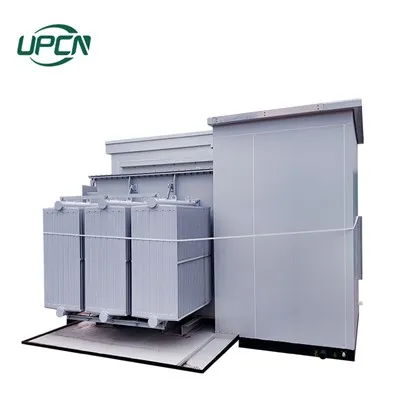
If you’re working on a project that needs a pad mounted transformer—whether it’s a new residential development, a commercial strip, a municipal facility, or anything in between—grounding is one of the most critical parts of the job. We can help you size the right unit, provide the correct grounding components, and offer the technical support you need to make sure the installation meets all local codes and safety standards. You don’t have to navigate the rules alone. To learn more about our pad mounted transformers and how we can support your grounding and installation needs, reach out to our team to discuss your project details today.
Dry Type Transformer References
National Electrical Code (NEC), 2023 Edition
Canadian Electrical Code (CEC), Part 1, 27th Edition
Institute of Electrical and Electronics Engineers (IEEE) Std 142-2007, Grounding for Industrial and Commercial Power Systems
Underwriters Laboratories (UL) 1561, Standard for Pad-Mounted, Dry-Type, and Vault-Type Transformers
Henan Union Power Construction Group Co., Ltd.
As one of the most professional pad mounted transformers manufacturers and suppliers in China, we have world-leading production equipment and strong manufacturing capabilities. Please rest assured to buy customized pad mounted transformers at competitive price from our factory.
Address: 701, Unit 1, Building 23, Phase II, Jindai Smart Industry Park, No. 17 Wenzhi Road,Guancheng Hui District, Zhengzhou City, Henan Province, P. R. China
E-mail: unionpower66@gmail.com
WebSite: https://www.unionpowertransformer.com/
