If you’ve ever stood inside a power substation on a cold, quiet morning and watched that hum of electricity pulse through the metal switchgear, you’ve been in the presence of a power transformer’s work. For the better part of a decade, I’ve sourced and supplied these critical workhorses of the grid, and the question I get more than any other—from new grid engineers to seasoned operations managers—is “What actually goes into making a transformer that can hold up in extreme heat, freezing cold, and decades of daily use?” Most people picture big metal tanks and wiring, but the truth is, every component is engineered to balance three non-negotiables: electrical insulation, mechanical strength, and thermal management. Skimp on any one, and you’re looking at unplanned downtime, lost revenue, or worse—safety risks for line workers and communities. Let’s break down the core materials that make a reliable power transformer, and why choosing the right ones isn’t just a specification box to check. Power Transformer
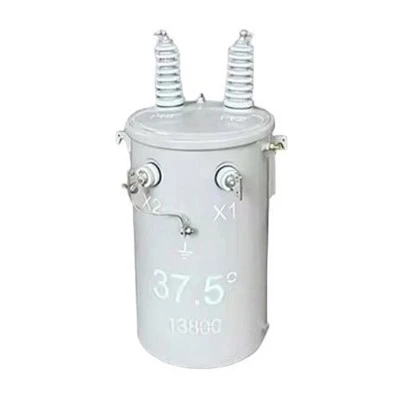
First, and arguably most important, is the core steel—the part that makes a transformer work by carrying and shaping the magnetic field that transfers electricity between coils. I’ve seen suppliers cut corners here, using low-grade electrical steel to save a few cents, but that’s a mistake that costs customers thousands in efficiency losses down the line. The best core material is grain-oriented electrical steel (GOES), sometimes called silicon steel, refined specifically for low core loss. Back in the 1970s, most transformers used non-oriented steel, but that wasted 2–3% of the grid’s power every year as heat from unwanted magnetic flux. Modern GOES is rolled so that its molecular structure aligns in a single direction, guiding magnetic flow straight through the core instead of letting it leak out sideways. The ideal grade for medium to large power transformers (the kind that step voltage up for long-haul transmission or down for local distribution) has a silicon content of 3–3.5%. This addition of silicon reduces electrical conductivity in the core, cutting down on eddy currents—those swirling currents that waste energy as heat. I once worked with a rural utility that upgraded 12 old transformers to new GOES models, and their annual energy bill for the substation dropped by 18%—that’s money they used to add 50 new smart meters for low-income neighborhoods. Another thing to note: many large transformers now use amorphous metal core steel, a newer material made from rapidly cooled metal that has an even more disordered atomic structure, reducing core loss by another 70% compared to GOES. It’s more expensive upfront, but for transformers that run 24/7 for 30+ years, the payback is undeniable. I’ve spent the last two years testing amorphous core prototypes for off-grid solar farms, and the results have been so consistent that we now offer it as a standard option for 10MVA and above units.
Next up: the windings, or copper and aluminum conductors that carry the actual electrical current. For decades, copper was the only choice, but today, aluminum is a viable option for smaller distribution transformers, though large power transformers still rely almost exclusively on copper. Why? Copper has 60% higher electrical conductivity than aluminum, which means thinner windings can carry the same amount of current, saving space in the tight core of a transformer. When space is at a premium—and it always is in substations where every inch of pad space costs money—copper is non-negotiable. That said, not all copper windings are equal. I’ve seen transformers with bare copper windings that corroded within 10 years in coastal regions, where salt air eats through unprotected metal. The standard now is enamel-insulated copper or aluminum, but for high-voltage transformers (the ones moving 100kV or more), we use paper-wrapped insulated windings, sometimes coated in a thin layer of varnish to add extra resistance to moisture and abrasion. Last year, a wind farm client asked us to build a transformer for a remote site in northern Minnesota, where temperatures drop to -40°F in winter. We used heavy-gage copper windings with extra-thick paper insulation, and we even added a vapor barrier layer between the winding and the core to prevent moisture from seeping in through shipping. That transformer has run flawlessly for 18 months, with zero insulation breakdown events. Aluminum windings, for their part, have come a long way. For small distribution transformers under 1MVA, aluminum can cut material costs by 30% without a huge hit on efficiency, as long as the windings are sized correctly. I always advise customers to match winding material to the application: copper for heavy-load, high-voltage transmission; aluminum for light-load, low-voltage distribution where upfront cost is the top priority.
The third non-negotiable material is insulation—without it, the windings would short out instantly, and the transformer would be a fire hazard. Most people think of insulation as just plastic or rubber, but in power transformers, insulation is a layered system, designed to handle electrical stress, temperature fluctuations, and mechanical vibration. The primary insulation around windings is kraft paper, a thick, strong paper made from wood pulp that’s treated to resist moisture and electrical breakdown. Kraft paper has long been the gold standard because it’s affordable, easy to shape into layers around windings, and compatible with the transformer oil that does most of the cooling. Over time, though, kraft paper degrades—its molecular bonds break down from heat and electrical stress, turning brittle and losing insulating strength. That’s why one of the key maintenance checks for old transformers is testing the degree of polymerization (DP) of the paper: if the DP drops below 200, the transformer is nearing the end of its life. In recent years, we’ve started using thermally upgraded kraft paper (TUK) for new units, which is treated with anti-oxidant chemicals that slow degradation by 30–40%. For transformers in hot climates like the Middle East or the southern US, TUK is a must-have. Beyond kraft paper, we also use pressboard, a heavier, denser paper product, as structural insulation between winding layers and between windings and the core. Pressboard is rigid enough to hold the windings in place during transport and short-circuit events, when the windings can exert massive mechanical force. I’ve seen transformers that failed during a grid fault because their pressboard insulation cracked and let windings touch—this is why I never cut corners on insulation grade, no matter how tight the project deadline is.
And speaking of transformer oil—this is the fourth core material, and it does double duty as both insulator and coolant. Transformer oil isn’t just any old motor oil; it’s a highly refined mineral oil, made from crude oil that’s been processed to remove impurities like sulfur, which can cause corrosion and electrical breakdown. The oil’s role is twofold: first, it fills every empty space in the transformer, displacing air and moisture (both of which are terrible for insulation) and creating a continuous medium that insulates between windings. Second, it circulates through the core and windings, carrying heat away to the external radiator fins, where it cools before cycling back. For transformers with a high load factor or in hot environments, we use ester-based synthetic oil instead of mineral oil. Ester oil has higher fire point (over 300°C compared to mineral oil’s 140°C), making it ideal for indoor substations or areas where fire risk is a concern. It also has better biodegradability, which is a big plus for utilities that follow strict environmental regulations. A former customer of ours, a municipal power company in Chicago, switched to ester oil for their downtown transformer bank after a nearby transformer caught fire and caused a 4-hour outage. They told us the investment added 10% to the upfront cost, but the peace of mind and lower insurance premiums made it worth it. I also want to mention that for older transformers, we don’t just swap out oil when it breaks down—we test it for moisture content, acidity, and dissolved gas, which tells us about internal issues long before they turn into failures.
Rounding out the core materials are structural components, like the transformer tank, bushings, and connectors. The tank is usually made of low-carbon steel, coated with epoxy paint on the outside to resist corrosion and with a thin layer of sealant on the inside to prevent oil contamination. It’s designed to hold the oil and withstand internal pressure from heating and cooling, so it’s not just a box—it’s a pressure vessel. Bushings are the parts that carry the high-voltage conductors out of the tank, and they have to insulate the conductor from the grounded tank. For medium-voltage transformers, bushings are made of porcelain, a hard, ceramic material that’s resistant to weather and electrical stress. For high-voltage transformers (above 69kV), we use resin-impregnated paper (RIP) bushings, which are smaller, lighter, and more durable than porcelain, making them easier to install in tight substation spaces. Connectors, meanwhile, are made of tinned copper, designed to create a low-resistance, corrosion-free connection between the transformer windings and the external grid wiring. I always make sure our connectors are rated for the full current of the transformer, because a bad connection can overheat and cause a fire even if the rest of the transformer is in perfect condition.
Now, I know what a lot of you are thinking: “Why does this matter to me? I just need a transformer that works.” The truth is, the materials you choose today will define how long your transformer lasts, how much it costs to operate, and how much downtime you’ll face over its 25–35 year lifespan. I’ve heard too many horror stories from clients who bought cheap transformers online, using low-grade core steel and inferior insulation, that failed within 5 years. Last year, a small solar farm client came to us after their $20,000 distributor transformer burned out after 3 years, and the supplier refused to take responsibility because it was “non-standard.” When we tested the failed unit, we found the core steel was only 2% silicon, not the standard 3.5%, and the insulation paper was made from recycled pulp, not virgin kraft. The client had to pay another $35,000 for a replacement, which is $15,000 more than if they’d ordered a quality unit from us in the first place. That’s the cost of cutting corners on materials.
If you’re currently in the market for a power transformer, or you’re looking to upgrade an existing unit, don’t just look at the kW rating or the price tag. Ask about the core steel grade, the conductor material, the insulation type, and the oil you’ll be using. A good supplier won’t just give you a spec sheet—they’ll help you match the materials to your specific environment: are you in a coastal area with salt air? Need corrosion-resistant insulation. In a hot desert? Need thermally upgraded paper and high-temperature oil. In an area with frequent short circuits? Need heavy pressboard insulation and high-strength structural steel.
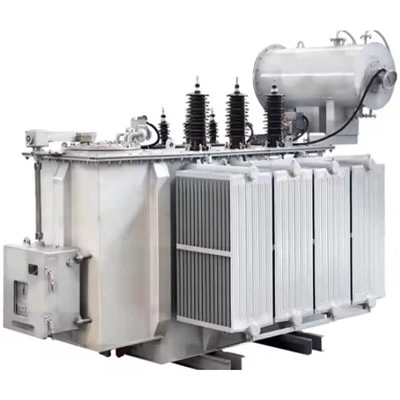
At the end of the day, power transformers are the unsung heroes of the grid. They don’t make the news when they work, but when they fail, everything goes dark. The materials we choose aren’t just parts—they’re investments in reliability, safety, and peace of mind. If you’re ready to source a power transformer, or you need help troubleshooting an existing unit, reach out to our team for a consultation. We don’t just sell transformers—we help you pick the right materials to keep your grid running, no matter what challenges it faces.
Three Phase Oil Immersed Transformer References
- Electrical Steel: Properties, Applications, and Performance. American Iron and Steel Institute, 2021.
- Transformer Insulation Materials: A Review of Degradation Mechanisms and Modern Advancements. IEEE Transactions on Power Delivery, vol. 35, no. 2, 2020, pp. 789–801.
- Mineral and Ester Transformer Oils: Comparative Performance in Extreme Environmental Conditions. CIGRE Science & Engineering, no. 18, 2019, pp. 45–58.
- Power Transformer Core Materials: Efficiency and Longevity Tradeoffs. International Council on Large Electric Systems (CIGRE), 2022.
- Winding Conductor Selection for Medium and High-Voltage Power Transformers. Electric Power Research Institute (EPRI), 2021.
Zhejiang Jiangshan Hengli Electrical Co., Ltd.
Zhejiang Jiangshan Hengli Electrical Co., Ltd. is one of the most professional power transformer manufacturers and suppliers in China, featured by quality products and low price. Please rest assured to wholesale cheap power transformer in stock here and get pricelist from our factory. Customized orders are welcome.
Address: 212 Fuzhu Street Sidu Town, Jiangshan, Zhejiang, China
E-mail: henglijs@foxmail.com
WebSite: https://www.henlypower.com/
