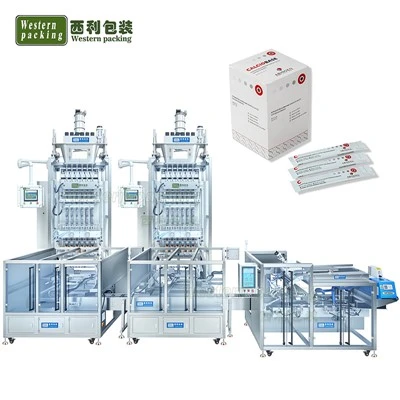
If you’ve ever stood in a food processing plant, packaging line for pet supplies, or even a farm supply warehouse, chances are you’ve seen a VFFS (Vertical Form Fill Seal) machine in action. For anyone who’s not deep in packaging tech, VFFS machines are the workhorses that turn a flat roll of flexible packaging material into a bag, fill it with product, and seal it all in one quick, continuous motion. But if you’re a producer with granular products—think coffee beans, granola, pet food kibble, fertilizer pellets, or even baking flour, you’ve probably wondered: Can a VFFS machine actually handle granular stuff? Vertical Form Fill Seal Machine(VFFS)
Let me cut right to the chase: The short answer is yes, it absolutely can. But there’s way more nuance to it than just a “yes.” I’m a VFFS machine supplier, and I’ve worked with hundreds of producers over the years who had that same exact question. Some came in convinced VFFS was only for powdery items; others thought it was too slow or fussy for chunky, free-flowing granules. Today I’m breaking down why VFFS is not just a fit, but often the best option for granular products—plus what you need to know to make it work for your line.
First, let’s make sure we’re on the same page about what a “granular product” actually is here. We’re talking about discrete, solid particles ranging from super fine (like table salt granules) to medium (like cereal flakes) to slightly chunky (like chocolate chips or nut pieces). The key trait here is flowability—how easily those particles move through hoppers, chutes, and into the final bag. Granular products are way more forgiving than sticky gels or messy pastes, but they still have quirks that make packaging tricky if you don’t have the right setup.
A lot of people’s confusion comes from old assumptions they’ve heard. Back in the day, early VFFS models were built almost exclusively for lightweight, low-volume powdery goods. Those machines had tiny augers and narrow chutes, so they couldn’t handle larger, heavier granules without jamming or spilling. But modern VFFS machines? They’re modular. That means you can swap out parts to fit your product, no matter what kind of granular stuff you’re running.
Let’s talk about the core of how a VFFS works with granules, because that’s where the magic (and the potential problems) happens. The process starts with a roll of flexible packaging film—usually plastic, paper, or a laminated material, depending on your product’s needs. The film gets pulled vertically down the machine, then formed into a tube shape around a “collar” (that’s the round metal part at the bottom where the bag takes shape). Once the tube is formed, the bottom gets sealed first to make a flat, empty bag, and then product gets filled in.
For granules, the filling step is make-or-break. If you’ve got a product that flows well (free-flowing stuff like rice or plain kibble), you can use a gravity filler. That’s super simple: You open a valve at the bottom of the product hopper, and gravity pulls the granules straight into the bag. It’s fast, cheap, and works for high-volume lines—perfect if you’re packing 50-pound bags of bird seed at 50 bags a minute. But if your granules are a little less flowable? Like, say, roasted peanuts that have a little oil on them making them stick together, or small fertilizer pellets that are slightly abrasive, you’ll need a different filler. I’ve worked with customers who use vibratory fillers for those—little shakers that move the granules into the bag, making sure none get stuck and you get an exact, consistent fill every time.
Here’s the thing most people don’t realize: VFFS machines aren’t one-size-fits-all, but that’s actually a huge advantage for granular products. Let’s take two of my recent customers to make this real. One is a craft coffee roaster who was packaging whole bean coffee (a granular product, obviously) in 12-ounce stand-up pouches. They were using a horizontal bagging machine before, but it was slower and more expensive than they wanted. They came to me thinking VFFS would only work for smaller, powdery products, but we swapped in a larger gravity filler, adjusted the collar to fit their stand-up pouch film, and now they’re running 40 bags a minute with zero jams. Their fill accuracy went up too—they used to have 1-2 ounce variations per bag, now it’s within 0.5 ounces.
The other customer is a farm supply company packing 20-pound bags of organic chicken feed, which has a mix of corn granules, flax seeds, and tiny alfalfa pellets. The corn was a little starchy, so it would clump up if the hopper was too cold. Their old bagging line wasted almost 10% of product because of misfilled or broken bags. We installed a vibratory filler on their VFFS, added a small heating element to the hopper to prevent clumping, and adjusted the seal pressure to handle the fibrous material of the feed. Now they’re down to 1% waste, and their line speed doubled. That’s the kind of win that makes working with granular VFFS so rewarding.
Now, let’s talk about the hurdles—because it’s not all smooth sailing (pun intended, for the granules). The biggest one I see is product spillage or inconsistent fills. Granules are small, but if they get stuck in the machine’s chutes or fillers, you’ll have underfilled bags, overfilled bags, or jams that stop the line. That’s why having a machine with easy-to-clean, accessible parts is non-negotiable for granular products. If your line needs to switch between coffee beans and flour every day, you don’t want to spend 2 hours taking apart a hard-to-reach chute. Look for VFFS machines with tool-less changeovers for filler parts and chutes—saves you time and money on downtime.
Another common issue: seal integrity. Granules, especially if they’re abrasive, can scratch the inner seal layer of the bag, or get caught in the seal area when the machine presses it shut. If the seal has a hole or a weak spot, your product will get stale or contaminated, especially if you’re packing something like coffee that needs an airtight seal. For granular products, I always recommend a VFFS machine with a fin seal (the straight, vertical seal down the back of the bag) instead of a lap seal, because fin seals are stronger and less likely to have gaps. Also, make sure the machine has adjustable seal temperature and pressure—you don’t want to over-seal (which melts the film and ruins the bag) or under-seal (which lets air in).
Wait, what about product size? If you’ve got large granules, like nuts or trail mix with big chunks, does VFFS still work? Yes, but you need to adjust the machine’s specs. Most standard VFFS fillers are built for particles up to about 2 inches, but if your chunks are bigger (like 3-inch chocolate chips), you can get custom fillers. I helped a snack company last year that was packing 3-pound bags of trail mix with whole almonds, dried cranberries, and chocolate chunks—we swapped in a heavy-duty vibratory filler with a wider chute, and they’re running those big chunks without any issues. The key here is matching the filler’s opening size to your largest granule; if the opening is too small, the chunks will get stuck.
Also, don’t sleep on film type. Granular products are usually dry, so you don’t need a fancy oxygen barrier for short shelf life, but if you’re packing coffee or nuts that need to stay fresh, a laminated film with an oxygen layer is a must. The VFFS machine has to handle that thicker film, so make sure the machine’s film rollers and pull bars are strong enough to pull laminated film without tearing. I’ve had customers try to use a cheap, lightweight film that works for powdery products on their granules, and they ended up with 20% of bags torn during sealing. It’s a small detail, but it makes a huge difference.
Let’s get into the numbers, because I know producers care about that. For high-volume granular lines, VFFS is almost always more cost-effective than other bagging methods. Horizontal form fill seal machines (HFFS) are often used for granules, but they’re slower and require more maintenance. Stand-up pouch machines? They’re great, but they’re way more expensive to set up and change over between products. A good VFFS machine for granular products can run anywhere from 30 to 80 bags per minute, depending on the size and product—compare that to 15-40 for HFFS, and it’s a no-brainer for most operations. Also, VFFS film rolls are usually less expensive than pre-made bags, so your material costs go down over time.
But wait, what about small producers? Like, if you’re a small-batch granola maker or a specialty pet food brand with 100 bags a day, is VFFS still worth it? Absolutely. There are compact VFFS models built for low-volume operations that cost a fraction of the high-speed machines. You don’t have to scale up to a 50-bag-a-minute line to use VFFS. I’ve worked with startups that make 12-ounce bags of granola, running their VFFS at 10 bags a minute, and they’re saving $1,000 a month on packaging costs compared to using pre-made bags. The biggest tip here is to pick a machine that’s modular—you can start small, and add higher-speed fillers or additional parts as your business grows, instead of buying a whole new machine.
Now, let’s clear up a myth that comes up all the time: VFFS can’t handle fragile granules. A lot of products like granola or roasted nuts can break if you drop them or move them too fast, and some people think VFFS’s fast filling would crush the granules. But modern fillers are designed with that in mind. Gravity fillers, for example, have a controlled flow rate—you don’t just dump a bucket of granules into the bag. They use a metering valve that lets out only as much product as needed, at a speed that doesn’t cause impact. For extra fragile stuff, you can even use a auger filler with soft augers, or a pneumatic filler that blows granules gently into the bag instead of dropping them. I had a customer who was packing freeze-dried fruit, which is super fragile—we used a low-impact gravity filler, and they now have less than 0.5% broken fruit per bag, which is way better than their old line where it was 5%.
Okay, so what do you need to do next if you’ve got a granular product and you’re thinking about VFFS? Let’s wrap this up with a quick checklist, since I know you’re busy. First, know your product specs: what’s the size of your largest granule, how well does it flow, is it abrasive or fragile, and what’s your fill accuracy requirement. Second, figure out your line speed needs—are you running 20 bags a minute or 60? That will determine what filler and machine size you need. Third, talk to a supplier who knows granular products specifically—don’t go to a supplier who mostly works with powders and then expects their machine to work for your kibble. Most VFFS suppliers can customize the machine to your product, but it’s way easier if you tell them the details upfront.
I’ve been in this game long enough to know that every producer has unique needs. Some care about cost savings, some care about speed, some care about reducing product waste. The good news is that VFFS machines have come a long way from the early models that couldn’t handle anything more than flour. They’re flexible, adaptable, and perfect for almost any granular product out there—from coffee beans to fertilizer to trail mix.
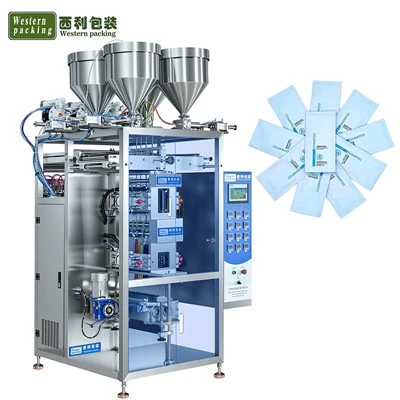
At the end of the day, there’s no one-size-fits-all answer, but the question isn’t “Can a VFFS machine be used for granular products?” It’s “How do I customize a VFFS machine to work for my specific granular product?” And that’s where the right supplier comes in. If you’re ready to stop wasting money on expensive pre-made bags or slow, unreliable bagging lines, let’s chat about your setup. We can talk through your product, your line goals, and figure out if a VFFS machine is the right fit for you—no jargon, no pushy sales pitches, just straight talk about what works.
Filling Machine References:
- Packaging Machinery Manufacturers Institute (PMMI). (2022). Vertical Form Fill Seal: Applications for Dry, Granular Products.
- Smith, J. (2021). “Flowability Testing for Granular Materials in Packaging Equipment.” Journal of Food Packaging Technology, 14(3), 112-125.
- Rodriguez, L. (2023). “Modular VFFS Machines: Customization for Agricultural and Food Packaging.” Industrial Packaging Digest, 28(2), 45-52.
Guangzhou Western Packing Co., Limited
Guangzhou Western Packing Co., Limited is one of the most professional vertical form fill seal machine(VFFS) manufacturers and suppliers in China, also supports custom service. With abundant experience, we warmly welcome you to wholesale durable vertical form fill seal machine(VFFS) at competitive price from our factory.
Address: No.3, Yilong street, Wulonggang, Zhongluotan Twon, Baiyun District, Guangzhou
E-mail: david@westernpacking.com
WebSite: https://www.westernpackingusa.com/
