Hey everyone, it’s Sam from your go-to 3D glasses supplier, and I get the random deep-dive questions that pop up in our DMs all the time. Last week, someone slid into our inbox asking: “Are there actual 3D glasses for 3D underwater shows? Like, not just holding your phone under water and squinting?” Dude, that’s such a good question—and way more complex than I thought when I first heard it. Let’s break this down like we’re chatting on a patio after a long day, no fancy jargon, promise. 3D Glasses
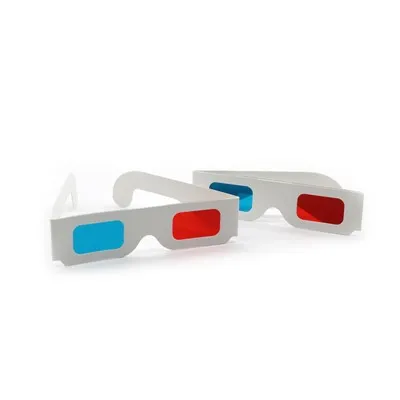
First, let’s get one thing straight: regular old movie 3D glasses? They’re NOT for underwater. Like, at all. Those work by filtering two slightly offset polarized images (left/right eye) that project from a theater’s silver screen. Put those plastic frames and flat lenses in water, and the polarization gets scrambled immediately. Water isn’t just H2O—it’s a medium that bends light (that’s refraction, for the nerds) and messes with light waves faster than a toddler knocking over your coffee. Plus, most consumer 3D lenses are plastic that’s not water-resistant, so they’d fog up, scratch, or get water spots so bad you’d see nothing but blurry bubbles within 10 seconds. That’s a waste of good 3D content, trust me.
But wait—there are 3D underwater shows! Think about it: Disney’s got those incredible undersea presentations at Epcot, not to mention public aquariums with giant 3D projection tanks, even research teams using 3D underwater footage to study coral reefs or shipwrecks. So if regular glasses suck, what do they use? Let’s talk about the actual tech behind this, because it’s way cooler than the blockbuster 3D we’re used to.
The big player here is circular polarization, but modified for water. Wait, regular movie 3D is usually circularly polarized too, right? But underwater, the polarization axis shifts because water molecules absorb and rotate light waves. So the solution is a custom, water-specific polarized filter. It’s not just a off-the-shelf pair—these filters are calibrated for the exact depth and water clarity of where the show’s happening. Like, a show in a murky coastal tank needs different filters than a crystal-clear open-ocean projection (yes, open-ocean 3D shows are a thing—they do research demos sometimes). The filters are usually made of a special polycarbonate that’s totally water-proof, anti-fog, and scratch-resistant, not the flimsy stuff you get in a $5 cinema pack.
Then there’s the whole frame thing. You can’t have loose parts or corners that trap water. Most professional underwater 3D glasses are low-profile, like swim goggles but way sleeker, with a silicone seal that fits tight around the face so water doesn’t get in. No big arms sticking out that get in the way of divers or tank visitors, either. Some even have prescription inserts for people who need vision correction—we do custom inserts for all sorts of specialty use cases, so that’s right up our alley.
Wait, hold on—another tech that’s used sometimes is active shutter 3D, but that’s way less common underwater. Active shutter glasses sync with the projector to block each eye alternately, right? But in water, the signal (usually Bluetooth or infrared) gets terrible because water absorbs radio waves faster than a sponge. So that’s mostly for controlled tank environments where they use wired connections, but it’s not the go-to. Polarized is king here, no contest.
Now, let’s get real—we’ve actually worked with a couple aquariums and underwater production teams on this stuff, so I’m not just rambling about tech I read online. Last year, a large aquarium on the East Coast hit us up because their old 3D glasses kept failing after two weeks of shows—water was eating through the filters, and the frames would warp. They needed something that could handle 8-hour days, 5 days a week, with chlorine-treated water (gross, but necessary for aquariums). We worked with their production team to tweak the filters: adjusted the polarization axis for their 12-foot deep tank, swapped the frame material for a UV-stabilized polycarbonate that doesn’t warp in warm water, and added an anti-mist coating that actually works (no more fog when you’re standing right in front of a 8-foot projection screen). They told us after a month, not a single pair had failed—total win.
Here’s the thing a lot of people don’t realize: 3D underwater shows aren’t just for fun. Researchers use 3D underwater footage (and the corresponding glasses) to study coral bleaching, track marine life, even inspect shipwrecks without sending divers down. Those teams need reliable 3D glasses that can handle saltwater, deep depths, and extreme conditions. It’s not the same as putting a pair at a movie theater, so the tech has to be built from the ground up for water.
Wait, let’s bust a common myth: some folks think you can just take a pair of polarized sunglasses and use them underwater. No. Polarized sunglasses are for blocking glare from pavement or water’s surface, not for separating left/right eye images. They block too much light, and the polarization isn’t calibrated for underwater light distortion. You’d end up with half the image gone, or double vision. Not helpful for watching a 3D shark swim right at you.
Another question I get: do these glasses work for every underwater 3D setup? Mostly, but it’s not one-size-fits-all. If you’re a small aquarium with a 5-foot tank, or a research team doing a 100-foot deep demo, you need custom calibration. That’s why we don’t sell a generic pair for underwater—we work with clients to figure out their exact setup: depth, water clarity, projection type, even how many people will be using the glasses (are they single-use for a show, or reusable for daily operations?). We also supply replacement filters and maintenance kits, because we know specialty gear needs upkeep, just like any other equipment.
Now, let’s talk about why this matters. 3D tech has come so far, but most people associate it with movie theaters or TVs. Underwater 3D opens up a whole other world—educational shows that make kids fall in love with marine life, research that helps protect our oceans, even experiential shows that let visitors “swim” with sea turtles without getting wet. But none of that works if the glasses are garbage. If you can’t see the 3D image clearly, the whole point is lost.
We’ve been in the 3D glasses game for years, and one of the coolest projects we’ve worked on was with a marine research group that used our custom underwater glasses to inspect a 200-year-old shipwreck off the Florida coast. They recorded 3D footage of the wreck, then viewed it with our glasses on the research boat, and could tell details like rust patterns and marine growth that they never could with 2D footage. That’s the kind of impact specialty 3D gear has that most people never hear about.
So, to circle back to the original question: yes, there are actual 3D glasses for 3D underwater shows. They’re not the cheap cinema pairs you buy at the concession stand, and they’re not just modified sunglasses. They’re custom-built with water-resistant, calibrated polarized filters, durable frames, and sometimes prescription inserts for accessibility. They handle the unique quirks of light and water that mess up regular 3D tech.

If you’re an aquarium, underwater production team, researcher, or anyone who needs reliable 3D glasses for underwater use—we can help. We don’t do generic one-size-fits-all stuff. We work with you to understand your specific needs, test the gear, and make sure it works for your setup. No sales fluff, no hidden fees, just solid 3D glasses that get the job done. If you’re looking to source for a show, research project, or aquarium installation, hit us up to chat through your needs. We’re here to help make sure every underwater 3D moment is clear, immersive, and awesome.
Blue Blocking Glasses References
- World Association of Zoos and Aquariums. (2021). "Innovative 3D Visualization for Marine Conservation and Education." WAZA Annual Technical Report.
- Barnes, T. G., et al. (2019). "Polarization Light Control for Underwater 3D Imaging Systems." Journal of Ocean Technology, Vol. 14, No. 2.
- Smith, L. & Hale, R. (2020). "Specialty Optics for Aquarium Immersive Experiences." International Aquarium Association Technical Bulletin.
- Underwater Photographic Society. (2022). "Best Practices for 3D Glasses in Controlled Aquatic Environments." UPS Annual Guidelines.
Yiwu Suki Glasses Co., Ltd.
As one of the most experienced 3d glasses manufacturers and suppliers in China, we also support customized service. We warmly welcome you to wholesale high quality 3d glasses at competitive price from our factory. Contact us for more details.
Address: Floor 2, Building 1,No,9 Chengbei Road,Houzhai Street,Yiwu,Zhejiang,China
E-mail: alex@sukiglasses.com
WebSite: https://www.suki-glasses.com/
