If you’ve ever worked in electronics manufacturing — whether you’re a design engineer, a procurement lead, or someone who just dabbles in getting prototypes off the ground — you’ve probably run into that split second where you ask, “Does this tiny detail actually matter for the project budget?” For me, as someone who’s been supplying 1.27mm pitch connectors and associated interconnect components for over a decade, that detail is 1.27mm pitch. It’s not just a number on a spec sheet. It’s a cost driver that creeps into every stage of a project, from initial design to mass production, and I’ve seen it make or break budgets more times than I can count. 1.27mm Pitch

Let’s start with what 1.27mm pitch even is, for anyone who’s not knee-deep in connector specs. Pitch is the distance between the centers of adjacent pins on a connector — think of it as the “space between” that dictates how many pins you can fit in a given area. 1.27mm is a common standard, sometimes called 0.050 inch (since that’s the imperial measurement it originated from), and it’s been around since the days of through-hole tech, long before fine-pitch connectors like 0.5mm or 0.8mm became the go-to for miniaturized gear. At first glance, that might make it sound old-fashioned — why would anyone use a bigger pitch when smaller is more compact? But here’s the thing: bigger pitch doesn’t just mean more space; it means less headache in costs, for a lot of projects.
Let’s talk design cost first, because that’s where almost every project starts. If you’re a designer working on a new product, you have to pick parts that fit your layout. If you skip 1.27mm pitch for a smaller pitch connector just because it’s “trending,” you might think you’re saving space, but you’re almost certainly adding hidden design costs. Smaller pitches mean tighter pin spacing, which translates to more precise PCB (printed circuit board) layout work. Your engineer can’t just run a basic trace between pins; they have to account for things like crosstalk, signal interference, and even the risk of solder bridges (when solder spills between adjacent pins, shorting them out). For 1.27mm pitch, though, that spacing is wide enough that most standard PCB design tools can handle it with their default settings. No need to buy premium, specialized layout software, or pay an engineer extra to work around tiny spacing issues.
I remember a client a couple years back — a startup making portable medical monitors — who initially went for a 0.8mm pitch connector to make their device slimmer. But by the time they got to layout, they were running into so many signal integrity issues that they had to redesign half their PCB, which pushed their first prototype timeline back two weeks and cost them an extra $12,000 in engineering fees. When they switched to our 1.27mm pitch connectors, they nailed the first prototype on layout, saved the engineering costs, and hit their launch date. That’s the kind of hidden cost no one talks about when they’re picking a connector.
Next up: production and assembly costs, which are where 1.27mm pitch really shines. Let’s break this down. First, solderability. If you’re doing through-hole assembly (still super common for connectors in consumer, industrial, and even medical gear), 1.27mm pitch is a dream. Through-hole components with that pitch don’t require specialized soldering equipment — you can use a standard wave solder machine that every contract manufacturer already has. Contrast that with fine-pitch surface-mount connectors, which often need selective soldering or even manual soldering for prototypes, because the pins are too close for a wave machine. Each time you add a specialized step, you add cost. Our 1.27mm parts? They work with any standard assembly line, so no extra machine rental, no extra labor training.
Then there’s defect rates. Solder bridges are the #1 cause of assembly delays, and as I mentioned earlier, smaller pitches have way higher bridge risks. I’ve seen clients using 0.5mm pitch connectors have defect rates of 3-5% during assembly, which means rework, extra materials, and lost time. For 1.27mm pitch, that defect rate is usually under 0.5%. Let’s do the math on that. Say you’re making 10,000 units. A 4% defect rate means 400 bad boards. Reworking each board costs, on average, $8. So that’s $3,200 in rework costs, just from defects. If you switch to 1.27mm, that’s 50 defects, or $400 — a savings of $2,800 right there, just on one batch. Multiply that over 10 batches, and that’s $28,000 back in your budget. It adds up fast.
Also, let’s not forget component pricing. Wait, some people assume smaller parts are cheaper, but that’s not always true. For fine-pitch connectors, demand is more niche, so manufacturers have longer lead times and lower production volumes, which drives up unit costs. 1.27mm pitch, though, is a mass-market standard. We make millions of these every month, so we can sell them at a fraction of the cost of a fine-pitch connector with the same pin count. Last year, I quoted a client for 50,000 units: a 20-pin 0.8mm connector was $0.75 each, while our 20-pin 1.27mm connector was $0.18 each. That’s a $0.57 per unit difference — $28,500 total savings just on parts. And that’s before factoring in the assembly defect costs we talked about. So much for “smaller is cheaper.”
But hold on, it’s not all roses. There are cases where 1.27mm pitch isn’t the right call. If you’re building a smartphone, where every cubic millimeter matters, you can’t use a 1.27mm pitch connector — it’s too big. That’s why fine-pitch rules there. But if you’re in industrial automation, consumer appliances, test and measurement equipment, or even automotive electronics for non-critical systems, 1.27mm is perfect. The tradeoff is worth it for the cost savings, reliability, and ease of use. I’ve seen so many projects overdesign themselves into a corner by picking a connector that’s too small, just to save space, only to blow their budget on hidden costs down the line.
Another big cost factor: supply chain resilience. Post-pandemic, everyone’s learned how risky it is to rely on parts with long lead times or limited suppliers. 1.27mm pitch is a universal standard, so there are hundreds of manufacturers making it, which means flexible lead times, no shortages, and better pricing because of competition. When a client came to us in 2022, they’d been waiting 12 weeks for a fine-pitch connector that their previous supplier was back-ordered on. We had 1.27mm equivalents in stock, so they got their parts in 10 days, avoided a 12-week delay, and didn’t have to halt their production line (which would have cost them $50,000 a week in lost revenue). That’s a supply chain cost that’s impossible to put a number on until you’re staring down a shutdown.
Now, let’s talk about reliability and long-term costs, which often get overlooked. 1.27mm pitch connectors are built to be durable — they can handle more insertions and more environmental stress (temperature, humidity, vibration) than many fine-pitch parts. For industrial equipment that’s going to be used in factories or outdoor settings, that means less field failures, fewer returns, and less warranty work. A client of ours in agricultural equipment had been using fine-pitch connectors in their irrigation control units, and they were seeing a 10% failure rate in the field within 18 months. They switched to our 1.27mm connectors, and that failure rate dropped to under 1%. The cost of a field failure isn’t just the part — it’s the labor to send a technician out, the downtime for the equipment, the customer’s trust. That’s a cost you can’t recover once the product is in the wild.
I know what some of you are thinking: “This guy is just trying to sell me connectors, so he’s biased.” Fair point. But let’s look at it from a neutral angle. I’ve been in this long enough to see that when a project’s budget is tight, 1.27mm pitch is one of the easiest, most impactful switches you can make. It’s not a one-size-fits-all solution, but for most projects that don’t need the absolute smallest form factor, it’s a cost saver at every step.
So where do you go from here? If you’re working on a project and wondering if 1.27mm pitch makes sense for you, don’t just rely on spec sheets or trends. Reach out, tell us about your project, what you’re building, your timeline, and your budget. We don’t do pushy sales — we just work with you to figure out if our 1.27mm components can cut your costs without compromising on quality. Whether you’re a small startup with a prototype or a large manufacturer gearing up for mass production, we can tailor a solution that fits your needs.
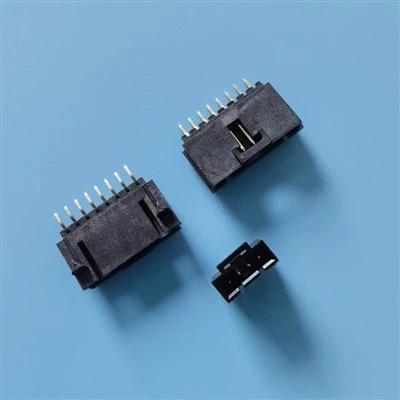
Don’t let that tiny spec number derail your budget. The next time you’re picking a connector, remember: 1.27mm pitch isn’t just a space saver — it’s a cost saver, if you use it right.
2.50mm Pitch References
IPC-2221, Generic Standard on Printed Board Design
IPC-CF-815, Generic Standard for Interconnection Components and Assemblies
NIST, Supply Chain Resilience in Electronics Manufacturing, 2023
Dongguan Yinglian Electronics Co., Ltd.
We’re well-known as one of the most professional 1.27mm pitch suppliers in China. With abundant experience, we warmly welcome you to buy bulk advanced 1.27mm pitch made in China here from our factory. If you have any enquiry about cooperation, please feel free to email us.
Address:
E-mail: James@csg-china.com
WebSite: https://www.csgconn.com/
