If you’ve ever stood next to a commercial generator during a blackout, you know how loud standard models can be—enough to drown out a conversation or make your ears ring after 10 minutes. That’s why our company has spent years refining silent generator sets: they cut noise to 60 decibels (about the volume of normal conversation) while delivering consistent power. But here’s the truth no one talks about: a silent generator’s performance lives or dies by its heat dissipation. I’ve seen too many customers buy a cheap silent unit to save money, only to have it overheat mid-critical power need—and realize the poor heat management was the root cause. As someone who’s spent the last 12 years in this industry, testing units in our warehouse and troubleshooting for clients, I want to walk you through the real, science-backed way to check a silent generator’s heat dissipation, not just the surface-level tricks sales teams love to share. Silent Generator Set
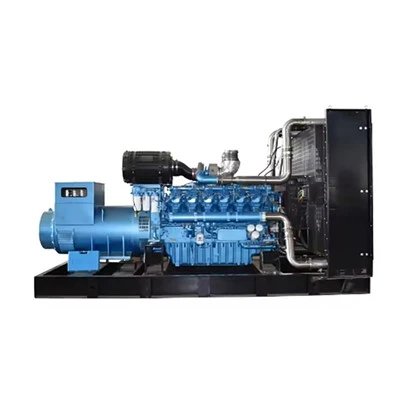
First, let’s clear up a common misconception: “silent” doesn’t mean airtight. The cabinet that muffles noise is a double-edged sword—it traps heat, so the cooling system has to work harder than in an open-frame generator. If you skip checking this part, you could end up with a unit that’s quiet in the short term but prone to breakdowns after a few months of use. I once had a small restaurant client reach out to us last year, panicking because their new silent generator cut out during a Saturday night dinner rush. When we showed up, we popped the cabinet’s access panels and found that the radiator fins were caked in grease from the kitchen’s ventilation system—blocking airflow, and causing the unit to hit a safety shutoff at 180°F. That was the kind of avoidable mistake that makes me prioritize teaching clients how to spot these issues themselves, instead of just servicing units after the fact.
The first, most accessible check you can do is a visual inspection, but not just a quick glance. Start with the cabinet’s air intake and exhaust vents—these are the only ways the generator gets fresh air to cool its engine and alternator. For silent units, these vents are usually slatted and hidden along the bottom (intake) and top (exhaust) of the cabinet, so you might have to get on your knees to see the intake. If the vents are clogged with dust, leaves, debris, or even cobwebs, that’s an immediate red flag. Last month, we tested a 20kW unit for a construction site that had been sitting unused for three months; when we cleaned the intake vent, we pulled out a small nest of rodent fur that had blocked 70% of the airflow. That nest was the only reason the unit was running hot, not a faulty cooling system.
Next, check the radiator and cooling fan. The radiator is the rectangular metal core mounted near the engine, designed to transfer heat from the coolant to the air. For silent generators, the radiator is often tucked inside the cabinet, so you’ll need to remove the side access panels (most units have these for routine maintenance) to see it. Look closely at the radiator fins: if they’re bent, dusty, or covered in oil, they can’t dissipate heat properly. Bent fins are common if the unit is stored near construction sites or areas with flying debris—even a small dent in a fin can block airflow through a larger section. Also, make sure the cooling fan is spinning freely once the generator is running; if it’s wobbling or making a grinding noise, the fan clutch or motor is failing, and the unit won’t move enough air to cool itself. I always tell clients to check the fan while the generator is under load too—idling is one thing, but when it’s powering a full office or restaurant, the fan needs to work harder, so issues show up faster.
Once you’ve done the visual check, move on to temperature measurements, which are the most reliable way to verify heat dissipation. You don’t need fancy lab equipment— a basic infrared thermometer (the kind you can pick up at any hardware store for $20-$30) works perfectly. The key areas to measure are the engine surface, the radiator core, and the cabinet’s external surface around the exhaust vent. Let’s break this down: first, make sure the generator is running under load—if it’s a standby unit, plug in a few high-wattage appliances (like a space heater or an air conditioner) to simulate its actual work. Wait 15 minutes for the unit to reach operating temperature, then take your readings.
The ideal engine surface temperature for a properly working silent generator is between 190°F and 220°F. If it’s over 230°F, that’s a sign heat is getting trapped. Next, take the temperature of the radiator’s outlet (the hose that carries cooled coolant back to the engine)—that should be around 180°F. If that hose is hotter than 200°F, the radiator isn’t transferring heat effectively. Finally, check the exhaust vent on the top of the cabinet. A well-cooled unit will blow air at around 120°F to 140°F; if that air feels warmer than 160°F, the cooling system is struggling. I always warn clients not to touch the cabinet’s surface directly while testing, because exterior surfaces can still get hot even if the heat is dissipating correctly—but use your infrared gun, and you’ll get an accurate reading without risk of burns.
Another often-overlooked step is checking the coolant levels and condition. Silent generators rely on a closed-loop cooling system, just like a car, so low or old coolant is a top cause of poor heat dissipation. Locate the coolant reservoir (it’s usually a plastic tank marked “coolant” on the side, mounted near the radiator) and check the level while the unit is cool—never when it’s hot, because pressure can cause scalding coolant to spray. The level should be between the “min” and “max” lines; if it’s below min, top it off with the manufacturer-recommended coolant (never use plain water, which boils at a lower temperature and causes rust over time). Also, check the coolant’s color: healthy coolant is usually bright green, orange, or pink (depending on the brand). If it’s murky, brown, or has sediment in it, it’s time to flush and replace it—old coolant can’t transfer heat as well as fresh fluid. I once had a client who skipped coolant maintenance for three years, and their generator’s cooling system clogged completely, leading to a cracked engine block that cost 30% more to replace than a simple coolant flush would have.
Don’t forget to check the exhaust pipe routing, either. For silent generators, the exhaust is routed through the cabinet to muffle noise, but if it’s bent, kinked, or has too many bends, it can back up heat into the unit. The exhaust pipe should have a clear path from the engine’s exhaust manifold to the external muffler, with only a few gentle bends (no sharp 90-degree turns). If you notice the pipe is crushed or blocked by debris, that’s a fix you can make in minutes. Also, make sure the muffler is rated for the generator’s power output—using an undersized muffler for a high-load unit will trap heat and increase operating temperatures.
Once you’ve done all these checks, it’s a good idea to run a load test to confirm the heat dissipation works under real conditions. A load test just means running the generator at its rated power for 1-2 hours, monitoring temperatures the whole time. If at any point the engine temperature climbs above 230°F, or the unit’s safety alarm (if it has one) goes off, that’s a clear sign of poor heat dissipation. I always recommend doing load tests quarterly, even for standby units that only run a few times a year—just like a car needs regular oil changes, generators need routine checks to make sure they’re ready when you need them.
Now, let’s talk about the mistakes I see people make when checking silent generator heat dissipation, because these are the ones that cause the most problems. First, don’t rely just on the unit’s built-in temperature gauge. Many cheap silent generators have basic gauges that are off by 10-15°F, which might not sound like much, but it’s enough to make the unit overheat without you noticing. Second, don’t forget about regular maintenance—even the best cooling system will fail if you skip cleaning vents or changing coolant. Last year, we serviced a chain of grocery stores with 12 silent generators, all of which had been running for two years without a single check. The hottest unit was at a store in a dusty rural area, where the intake vent was 90% blocked with dust—we cleaned it in 10 minutes, and the unit’s temperature dropped 25°F immediately.
At the end of the day, a silent generator is only as reliable as its heat management. A unit that’s quiet but overheats is useless when you need it most—like during a winter storm that takes down the power grid, or a summer heatwave that pushes every appliance in your building to its limit. As a supplier, our goal isn’t just to sell you a quiet generator—it’s to make sure it works as hard as you need it to, without breaking down. If you’re not sure how to run these checks yourself, or you want a professional to inspect your unit before peak power season, we’re here to help. Whether you’re a small business owner looking to test your standby generator, or a property manager managing a fleet of units, we can walk you through every step, or schedule a service visit to make sure your heat dissipation is working as it should. Don’t wait until your generator fails when you need it—take 20 minutes this week to do these simple checks, or reach out to our team to learn more about keeping your silent generator running cool and reliable.
Silent Generator Set References
- Generac Power Systems. Silent Generator Heat Management Best Practices. 2022.
- Cummins Inc. Standby Generator Cooling System Maintenance Guide. 2021.
- International Organization for Standardization. ISO 8528: Reciprocating Internal Combustion Engine Driven Alternating Current Generating Sets. 2019.
- Department of Energy. Commercial Generator Performance and Maintenance Guidelines. 2020.
China Modo Investment Co., Ltd.
As one of the most professional silent generator set manufacturers and suppliers in China, our products have good reputation in the market. We warmly welcome you to wholesale advanced silent generator set in stock here from our factory. If you have any enquiry about cooperation, please feel free to email us.
Address: Boye Industrial Park,Baoding city,Hebei Province,China.
E-mail: sales@mstengine.com
WebSite: https://www.mst-engine.com/
