As a supplier of Dental Titanium Round Discs, I’ve had the privilege of being deeply involved in understanding every aspect of these essential dental products. In this blog, I’ll delve into the chemical composition of dental titanium round discs, explaining why it matters, and how it impacts the quality and performance of dental restorations. Dental Titanium Round Discs
Understanding Titanium in Dentistry
Titanium is a remarkable metal that has revolutionized the field of dentistry. Its unique properties make it an ideal choice for a wide range of dental applications, from implants to crowns and bridges. Unlike some other metals, titanium is biocompatible, which means it is well – tolerated by the human body and does not cause adverse reactions. This property is crucial in dental applications, as dental restorations are in direct contact with oral tissues for extended periods.
The Basic Chemical Composition of Titanium
Pure titanium (Ti) is the base element of dental titanium round discs. It has an atomic number of 22 and is known for its high strength – to – weight ratio, excellent corrosion resistance, and low density. In its pure form, titanium exists as a lustrous, silver – gray metal.
However, in dental applications, pure titanium is often alloyed with other elements to enhance its properties further. There are different grades of titanium used in dentistry, and each grade has a slightly different chemical composition. The most common grades used for dental titanium round discs are Grade 1, Grade 2, Grade 3, and Grade 4, with Grade 2 being the most widely used.
Grade 2 Titanium
- Composition: Grade 2 titanium contains at least 99% titanium. The remaining percentage consists of small amounts of impurities and trace elements. Oxygen is one of the key trace elements in Grade 2 titanium, with a maximum content of 0.25%. Nitrogen content is limited to 0.03%, carbon to 0.08%, and iron to 0.30%.
- Properties: The addition of these small amounts of trace elements in controlled quantities gives Grade 2 titanium a good balance of properties. It has relatively high ductility, which means it can be easily formed into various shapes during the manufacturing process of dental restorations. At the same time, it still retains excellent corrosion resistance, making it suitable for long – term use in the oral environment.
Other Titanium Alloys in Dental Titanium Round Discs
Apart from pure titanium grades, there are also titanium alloys used in dental titanium round discs. One of the most common titanium alloys in dentistry is Ti – 6Al – 4V.
Ti – 6Al – 4V Alloy
- Composition: As the name suggests, this alloy consists of 6% aluminum (Al) and 4% vanadium (V) by weight, with the remaining being titanium. Aluminum is added to improve the strength and oxidation resistance of the alloy. Vanadium enhances the strength and ductility of the material.
- Properties: Ti – 6Al – 4V alloy has a much higher strength compared to pure titanium grades. This makes it a popular choice for dental applications where high strength is required, such as in dental implants. The alloy also has good fatigue resistance, which is important as dental restorations are subjected to repeated mechanical stress during chewing. However, it should be noted that in some cases, the presence of vanadium has raised some concerns about potential long – term biocompatibility, although current research shows that it is generally safe for dental use.
Another Alloy: Ti – Zr Alloy
- Composition: Titanium – zirconium (Ti – Zr) alloys are also emerging as an alternative in dental applications. These alloys typically contain a significant amount of zirconium in combination with titanium, with the specific ratio varying depending on the manufacturer’s formulation.
- Properties: Zirconium is added to improve the biological and mechanical properties of the alloy. Ti – Zr alloys have been reported to have better corrosion resistance in the oral environment compared to some other titanium alloys. They also exhibit good biocompatibility and can be used in a variety of dental restorations.
Impact of Chemical Composition on Dental Applications
The chemical composition of dental titanium round discs directly affects their performance in dental restorations.
- Strength and Durability: Alloys like Ti – 6Al – 4V are chosen for applications where high strength is required. Dental implants need to withstand the forces of chewing and the pressure exerted on them by the surrounding bone. A strong alloy ensures that the implant remains intact and functional over time. Pure titanium grades, on the other hand, may be more suitable for applications where some flexibility and malleability are needed, such as in the fabrication of certain types of dental crowns.
- Biocompatibility: The presence of trace elements and the overall chemical purity of the titanium discs play a crucial role in biocompatibility. Dental materials need to be well – tolerated by the body’s immune system. The controlled composition of dental titanium round discs ensures that they do not trigger any immune reactions or cause harm to the surrounding oral tissues.
- Corrosion Resistance: The oral environment is a harsh place with various acids, saliva, and bacteria. The chemical composition of the titanium discs determines their ability to resist corrosion. All elements are carefully selected and maintained within specific limits to ensure that the dental restorations do not corrode over time, which could lead to discoloration, weakening of the structure, and potential health risks to the patient.
Quality Control in Chemical Composition
As a supplier of Dental Titanium Round Discs, ensuring the correct chemical composition is of utmost importance. We have strict quality control measures in place to guarantee the purity and consistency of the titanium discs.
- Raw Material Selection: We source high – quality raw materials from trusted suppliers. Before using any raw material in the production process, it undergoes rigorous chemical analysis to confirm its composition. This helps us start with a clean and accurate base for manufacturing our dental titanium round discs.
- Manufacturing Process: During the manufacturing process, we closely monitor the chemical reactions and element additions. We use advanced technologies and equipment to ensure that the final product has the desired chemical composition. For example, in the case of alloys, we precisely control the amount of alloying elements added to maintain the correct ratio.
- Testing and Certification: Once the dental titanium round discs are produced, they are subjected to detailed chemical analysis and testing. We use techniques such as spectroscopy to determine the exact chemical composition. Only after the discs pass all the quality tests and meet the international standards for dental materials do we release them to the market.
Why Choose Our Dental Titanium Round Discs
Our dental titanium round discs are a result of years of research, experience, and strict quality control. We understand the importance of the chemical composition in dental applications, and we are committed to providing products that meet the highest standards.
Whether you are a dental laboratory looking for high – quality materials for dental restorations or a dental practitioner in need of reliable dental implants, our dental titanium round discs offer an excellent choice. We can provide you with different grades and alloys to suit your specific needs.
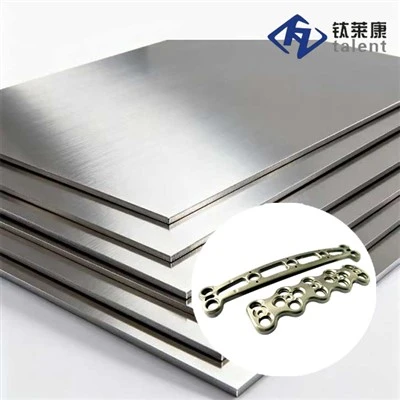
Titanium Plates We invite you to get in touch with us to discuss your procurement requirements. If you have any questions about the chemical composition, properties, or applications of our dental titanium round discs, our team of experts is ready to assist you. Contact us to start a discussion about how our products can enhance the quality of your dental services.
References
- Williams, D. F. (2008). On the mechanisms of biocompatibility. Biomaterials, 29(20), 2941 – 2953.
- Ratner, B. D., Hoffman, A. S., Schoen, F. J., & Lemons, J. E. (Eds.). (2004). Biomaterials science: An introduction to materials in medicine. Elsevier.
- Nickel, J., & Schliephake, H. (2001). Titanium for dental implants. In Interface Tissue Responses to Implants (pp. 23 – 34). IOS Press.
Baoji Tailaikang High-Tech Metal Materials Co., Ltd.
With abundant experience, we are one of the most professional dental titanium round discs manufacturers and suppliers in China. Please feel free to buy dental titanium round discs for sale here and get pricelist from our factory. For price consultation, contact us.
Address: No. 1, Southeast Cross of Gaoxin Avenue and Fenghuang 3rd Road, High-tech Development Zone, Baoji City, Shaanxi Province, China
E-mail: sale@tlkjs.com
WebSite: https://www.tlkmetal.com/
