How does a wheel tractor work?
As a proud supplier of wheel tractors, I’ve witnessed firsthand the impressive capabilities and intricate engineering behind these powerful machines. Wheel tractors are versatile workhorses used in a wide range of industries, from agriculture to construction. In this blog post, I’ll take you through the inner workings of a wheel tractor, explaining how it operates and the key components that make it such a valuable asset. Wheel Tractor
The Basics of a Wheel Tractor
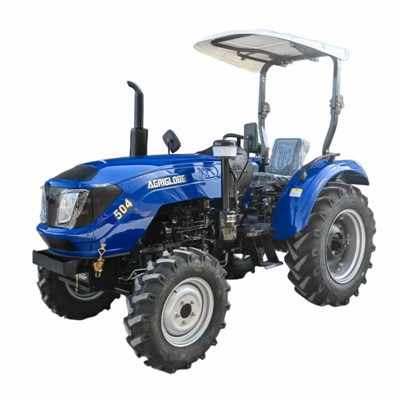
A wheel tractor is a self – propelled vehicle designed to pull or push heavy loads. It typically consists of a powerful engine, a transmission system, a drivetrain, wheels or tracks, and a cab where the operator controls the machine. The main function of a wheel tractor is to generate traction, enabling it to move large or heavy objects with relative ease.
Engine: The Heart of the Machine
The engine is the most crucial component of a wheel tractor. It provides the power needed to drive the vehicle and operate its various attachments. Most wheel tractors are powered by diesel engines, which are known for their high torque output and fuel efficiency. Diesel engines work on the principle of compression ignition. Air is drawn into the engine cylinders and compressed to a high pressure, which raises the air temperature significantly. Then, fuel is injected into the hot, compressed air, causing it to ignite spontaneously. This combustion process creates a rapid expansion of gases, which forces the pistons down and turns the crankshaft.
The power generated by the engine is measured in horsepower (hp). The horsepower rating of a wheel tractor can vary widely depending on its size and intended use. Smaller tractors used for light – duty tasks, such as lawn maintenance or small – scale farming, may have engines with as little as 10 – 20 hp, while large industrial tractors can have engines that produce several hundred horsepower.
Transmission System
The transmission system is responsible for transferring the power from the engine to the wheels at the appropriate speed and torque. There are two main types of transmissions commonly used in wheel tractors: manual and automatic.
A manual transmission allows the operator to select different gears manually using a gear shifter. Each gear provides a different ratio of engine speed to wheel speed, which is useful for adapting to different operating conditions. For example, a lower gear provides more torque but less speed, which is ideal for pulling heavy loads or working on steep slopes. A higher gear, on the other hand, offers more speed but less torque, suitable for traveling on flat terrain.
Automatic transmissions, on the other hand, use a complex system of sensors and hydraulic controls to shift gears automatically. This type of transmission is more convenient for operators, especially in situations where frequent gear changes are required. Automatic transmissions can also optimize the engine’s performance by selecting the most appropriate gear based on the load and speed of the tractor.
Drivetrain
The drivetrain is the system that transfers the power from the transmission to the wheels. It consists of several components, including the driveshaft, differential, and axles.
The driveshaft is a rotating shaft that connects the transmission to the differential. It transmits the power from the transmission to the differential, which then distributes the power to the wheels. The differential is a crucial component that allows the wheels on the same axle to rotate at different speeds. This is necessary when the tractor is turning, as the outer wheel has to travel a greater distance than the inner wheel.
The axles are the shafts that support the wheels and transfer the power from the differential to the wheels. In a wheel tractor, there can be either two – wheel drive (2WD) or four – wheel drive (4WD) configurations. A 2WD tractor typically has power transmitted to either the front or the rear wheels, while a 4WD tractor has power sent to all four wheels. 4WD tractors offer better traction and stability, especially in challenging terrain or when pulling heavy loads.
Wheels and Tires
The wheels and tires of a wheel tractor play a vital role in its performance. The size, type, and tread pattern of the tires can significantly affect the tractor’s traction, stability, and maneuverability.
Agricultural wheel tractors often use large, wide – based tires with deep treads. The large size of the tires helps to distribute the weight of the tractor over a larger area, reducing soil compaction. The deep treads provide excellent traction on soft and uneven ground, such as farm fields.
Construction wheel tractors, on the other hand, may use tires with different tread patterns and designs. Some construction tires are designed for better traction on hard surfaces, while others are more suitable for off – road use. The choice of tires depends on the specific application and the type of terrain the tractor will be operating on.
Cab and Controls
The cab is the operator’s workspace, where they can control the tractor’s functions and monitor its performance. Modern wheel tractors are equipped with comfortable and ergonomic cabs that are designed to reduce operator fatigue. The cab is usually sound – insulated and climate – controlled to provide a comfortable working environment.
Inside the cab, there are various controls and instruments. The steering wheel allows the operator to control the direction of the tractor. The accelerator pedal controls the engine speed, while the brake pedal is used to slow down or stop the tractor. There are also controls for the transmission, hydraulic system, and other auxiliary functions. In addition, the cab is equipped with instruments such as a speedometer, tachometer, fuel gauge, and warning lights to provide the operator with important information about the tractor’s status.
Hydraulic System
The hydraulic system is an essential part of a wheel tractor. It is used to power various attachments and perform tasks such as lifting, lowering, and tilting. The hydraulic system consists of a hydraulic pump, hydraulic cylinders, valves, and hoses.
The hydraulic pump is driven by the engine and is responsible for generating hydraulic pressure. The hydraulic pressure is then transferred through the hoses to the hydraulic cylinders, which convert the hydraulic pressure into linear motion. By controlling the flow of hydraulic fluid using valves, the operator can control the movement of the cylinders and, in turn, the operation of the attachments.
Common attachments that use the hydraulic system include loaders, backhoes, and snowplows. For example, in a front – end loader, the hydraulic cylinders are used to lift and lower the bucket, as well as to tilt it forward and backward.
Working Principles in Different Applications
Agriculture
In agriculture, wheel tractors are used for a variety of tasks, such as plowing, tilling, seeding, and harvesting. When plowing, the tractor’s power is used to pull a plow through the soil. The tractor’s engine provides the necessary torque to overcome the resistance of the soil, while the drivetrain and wheels ensure that the tractor can move forward steadily. The hydraulic system may be used to adjust the depth and angle of the plow.
During tilling, the tractor pulls a tiller, which breaks up the soil and prepares it for planting. The speed and power of the tractor can be adjusted according to the type of soil and the desired tillage depth. Seeding and harvesting operations also rely on the tractor’s power and mobility. Attachments such as seed drills and combine harvesters can be easily connected to the tractor using the three – point hitch and hydraulic system.
Construction
In the construction industry, wheel tractors are used for tasks such as site preparation, grading, and moving materials. For site preparation, the tractor may be equipped with a bulldozer blade or a ripper. The bulldozer blade is used to push large amounts of soil, gravel, or debris, while the ripper can be used to break up hard – packed soil or rock.
Grading is another important task in construction, where the tractor is used to create a smooth and level surface. The tractor’s hydraulic system allows for precise control of the grading blade, ensuring that the desired slope and elevation are achieved. When it comes to moving materials, wheel tractors can be equipped with loaders to pick up and transport sand, gravel, or other construction materials.
Why Choose Our Wheel Tractors
Our wheel tractors are designed with the latest technology and engineering expertise to provide superior performance and reliability. We understand the diverse needs of our customers in different industries, and we offer a wide range of tractors with various configurations and power ratings.
Our tractors are equipped with high – quality engines that deliver optimal power and fuel efficiency. The transmission systems are designed for smooth and precise operation, whether it’s a manual or automatic transmission. The drivetrain components are built to last, ensuring reliable power transfer to the wheels.
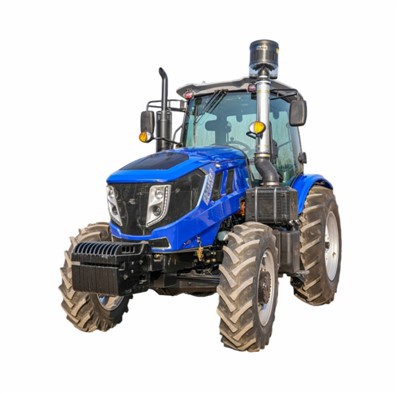
We also focus on the safety and comfort of the operators. Our cabs are spacious, well – equipped, and designed to minimize fatigue. The hydraulic systems are easy to operate and provide consistent performance for the attached implements.
Tractor Attachments If you are in the market for a wheel tractor, we invite you to contact us for a detailed discussion. Our team of experts is ready to help you choose the right tractor for your specific needs and provide you with all the necessary information and support. Whether you are in agriculture, construction, or any other industry that requires a powerful and versatile workhorse, our wheel tractors are the ideal solution.
References
- "Agricultural Machinery: Principles and Applications" by David R. Hugie.
- "Construction Equipment Handbook" by Frank W. Harris.
Shandong Ling Ke Industry Group Co., Ltd.
As one of the most professional wheel tractor manufacturers and suppliers in China, we’re featured by quality products and good price. Please rest assured to buy cheap wheel tractor for sale here from our factory. We also accept customized orders.
Address: 50 Meters West of the Connecting Road Between Jiuma Road and Shima Road, Fangzi District, Weifang City, Shandong Province, P.R.China
E-mail: aileenlin@sdlingkegroup.com
WebSite: https://www.lingketractor.com/
