Hey there! I’m a supplier of wear-resistant parts, and I’ve been in this business for quite a while. One of the most common questions I get from customers is how to increase the hardness of wear-resistant parts. Well, I’m here to share some tips and tricks that I’ve picked up over the years. Wear Resistant Parts
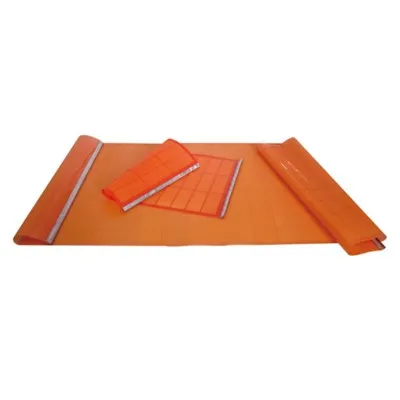
First off, let’s talk about why hardness is so important in wear-resistant parts. Hardness is a measure of a material’s ability to resist deformation and wear. The harder a part is, the better it can withstand the forces and abrasion it encounters in its working environment. So, if you want your wear-resistant parts to last longer and perform better, increasing their hardness is a must.
One of the most effective ways to increase the hardness of wear-resistant parts is through heat treatment. Heat treatment involves heating the part to a specific temperature and then cooling it at a controlled rate. This process can change the microstructure of the material, making it harder and more wear-resistant. There are several different types of heat treatment, including annealing, quenching, and tempering.
Annealing is a process that involves heating the part to a high temperature and then slowly cooling it. This helps to relieve internal stresses in the material and make it more ductile. Quenching, on the other hand, involves heating the part to a high temperature and then rapidly cooling it in a liquid, such as water or oil. This process can make the material very hard, but it can also make it brittle. Tempering is a process that involves heating the quenched part to a lower temperature and then cooling it slowly. This helps to reduce the brittleness of the material and make it more tough.
Another way to increase the hardness of wear-resistant parts is through the use of alloying elements. Alloying elements are metals or non-metals that are added to the base material to improve its properties. Some common alloying elements used in wear-resistant parts include chromium, nickel, molybdenum, and vanadium. These elements can increase the hardness, strength, and wear resistance of the material.
For example, chromium is a popular alloying element because it can form a hard, protective oxide layer on the surface of the material. This layer can help to prevent corrosion and wear. Nickel is another common alloying element that can improve the toughness and ductility of the material. Molybdenum and vanadium can also increase the hardness and strength of the material.
In addition to heat treatment and alloying, there are other ways to increase the hardness of wear-resistant parts. One way is to use a coating or surface treatment. Coatings can provide a hard, wear-resistant layer on the surface of the part, while surface treatments can modify the surface properties of the material. Some common coatings and surface treatments used in wear-resistant parts include nitriding, carburizing, and plating.
Nitriding is a process that involves introducing nitrogen into the surface of the material. This can form a hard, wear-resistant layer on the surface of the part. Carburizing is a process that involves introducing carbon into the surface of the material. This can also increase the hardness and wear resistance of the part. Plating is a process that involves depositing a thin layer of metal on the surface of the part. This can provide a hard, wear-resistant layer and also improve the corrosion resistance of the material.
Finally, it’s important to choose the right material for your wear-resistant parts. Different materials have different properties, and choosing the right material can make a big difference in the performance and durability of your parts. Some common materials used in wear-resistant parts include steel, cast iron, ceramics, and polymers.
Steel is a popular material for wear-resistant parts because it is strong, durable, and can be heat-treated to increase its hardness. Cast iron is also a common material because it is inexpensive and has good wear resistance. Ceramics are a good choice for high-temperature applications because they are very hard and wear-resistant. Polymers are a good choice for applications where weight is a concern because they are lightweight and have good wear resistance.
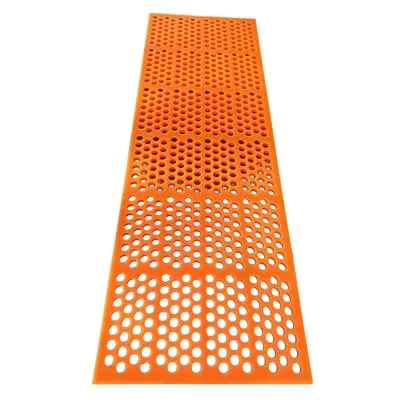
So, there you have it! These are some of the ways to increase the hardness of wear-resistant parts. If you’re looking for high-quality wear-resistant parts, I’d be happy to help. Just reach out to me, and we can discuss your specific needs and requirements.
Polyurethane Screen References:
-ASM Handbook, Volume 4: Heat Treating
-ASM Handbook, Volume 13A: Corrosion: Fundamentals, Testing, and Protection
-ASM Handbook, Volume 18: Friction, Lubrication, and Wear Technology
Yangzhou Yaye Wire Mesh Manufacturing Co., Ltd.
As one of the most professional wear resistant parts manufacturers in China, we have world-leading production equipment and strong manufacturing capabilities. Please feel free to wholesale cheap wear resistant parts in stock here from our factory. Also, free sample is available.
Address: No. 1 Jiangjia Road, High-tech Industrial Park, Jiangdu District, Yangzhou City, Jiangsu Province
E-mail: 13952515577@163.com
WebSite: https://www.yayescreen.com/
