Hey guys, let’s cut to the chase—if you’re in the HVAC, industrial refrigeration, or process cooling game, you’ve probably heard the term “heat transfer coefficient” (we’ll just call it U-factor from now on, ‘cause that’s the slang we use in the supplier world) thrown around more than a cheap BBQ at a summer cookout. And if you’re shopping for a water-cooled condenser, that U-factor isn’t just a random number on a spec sheet—it’s the make-or-break for how efficient your system runs, how much you spend on utilities, and whether you’ll be calling us (your go-to water-cooled condenser supplier) to fix a underperforming unit next month. Let’s break this down like we’re shooting the breeze in our warehouse, no stuffy engineering jargon that makes your eyes glaze over. Water Cooled Condenser
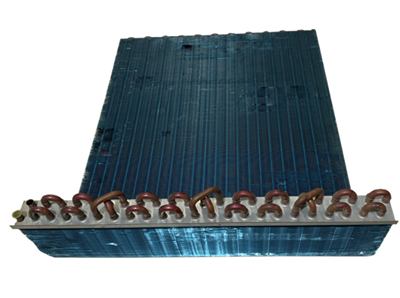
First off, what exactly is this U-factor? I’ve seen a lot of new installers or facility managers confuse it with “how well the condenser cools water” but nah—it’s the overall measure of how fast heat moves from the refrigerant inside the condenser tubes to the cooling water flowing around (or through) those tubes, and then out to the ambient air (wait, no—wait, water-cooled, so it’s transferring heat to the water loop, which then dumps it to the tower or lake. Yeah, that’s right). Think of it as a relay race: the refrigerant hands off heat to the tube wall, the wall passes it to the water, and the U-factor is the total speed of that whole race. Higher U-factor = faster heat transfer = less energy wasted, plain and simple.
But here’s the thing—this isn’t a one-size-fits-all number. I get calls every week from guys asking “what’s the U-factor for your condensers?” like it’s a fixed stat, but it’s way more dynamic than that. It depends on a handful of variables, and I should know—we test every single condenser that leaves our yard, because cutting corners on U-factor kills your system’s lifespan. Let’s talk about the big three factors that actually move the needle, ‘cause if you understand these, you’ll sound way smarter when you’re haggling with your utility rep or spec’ing a new condenser.
First, water velocity. This is the #1 thing we nerd out on in our test lab. If your cooling water is just trickling through the tubes like a garden hose left half-open, you’ve got a thin layer of warm water clinging to the tube wall—called a “boundary layer” if you want to get technical, but I call it a heat barrier. Crank that velocity up to 2-3 meters per second (that’s like, a fast shower flow, not a fire hose) and you scrub that warm layer right off the wall. We’ve tested our standard tube condensers vs. units that run too slow—at 1 m/s, the U-factor drops by almost 30% compared to 2.5 m/s. That translates to 30% more electricity for your water pump, and that adds up quick over a year. I had a client last year who kept his water valve half-shut to save $10 a month on water, and ended up paying $80 more on his electric bill. Oops.
Second, tube material and condition. We use copper-nickel tubes for 90% of our commercial units, not the cheap bare copper you might find on Amazon. Why? Copper is an okay heat conductor, but copper-nickel (10% nickel, 90% copper) is way better at transferring heat, and it resists scaling. Scaling is that crusty mineral buildup from hard water that forms on the tube wall, right? That’s another heat barrier, and it’s a killer for U-factor. If you let scaling build up just 1mm thick, your U-factor drops by 15%—and if you’re in a hard water area (most of the US and Europe, tbh), that can happen in 6 months if you don’t treat your water. We add micro-fins to the inside of our tubes too—they’re tiny, spiral ridges that mess with the boundary layer, so even at lower velocities, we keep U-factors high. Tested it? Those micro-fins add 10-12% more heat transfer vs. smooth tubes. No brainer.
Third, refrigerant-side conditions. The type of refrigerant, its temperature, and whether it’s desuperheating (that first part of condensation where the refrigerant is still hot vapor) or fully condensing matter a lot. For R-410A, which is super common in AC units, our condensers hit a U-factor of around 1,800-2,200 W/m²·K under normal operating conditions. For ammonia, which is big in industrial refrigeration, it’s a bit higher—like 2,200-2,600 W/m²·K—because ammonia is way more thermally conductive than HFC refrigerants. But wait, if your refrigerant pressure drops too low (from a leak, or overcharging), its saturation temperature drops, and the U-factor takes a hit. We’ve had clients come to us with old condensers where the refrigerant charge was 20% low, and their U-factor was 25% lower than rated. That’s just bad maintenance, plain and simple.
Now, let’s get real about rated U-factors vs. real-world U-factors. Every condenser manufacturer puts a U-factor on their spec sheet, right? But that number is under lab-perfect conditions—clean tubes, ideal water velocity, perfect water chemistry. In the field? You’re gonna lose 10-20% off that rated U-factor just from minor scaling, slightly off water flow, or a tiny refrigerant leak. That’s why we always tell clients to add a safety margin when sizing their condenser. If you need a U-factor of 1,800 W/m²·K, don’t spec a unit rated for 1,800—get one rated for 2,000. That way, even when things get dirty or flow drops a little, your system still runs like it’s supposed to.
I also want to bust a myth here: higher U-factor doesn’t mean a bigger, more expensive condenser. A lot of guys think “if I want better heat transfer, I need a thicker unit,” but nope—it’s about design. Our condensers are engineered to have high U-factors without adding extra size, because we use those micro-finned tubes and optimize the water flow path. We once did a side-by-side test with a competitor’s unit that was the same size as ours—our U-factor was 15% higher, and they charged $2,000 more. That’s the value of working with a supplier that actually understands U-factor, not just slapping tubes together.
What about common mistakes that tank U-factor? Let’s list ‘em, ‘cause these are things we see every day that make clients call us for replacements:
-
Bad water treatment. Like I said earlier, scaling is a U-factor killer, but so is biofouling—algae and bacteria growing on the tube walls. If you don’t have a water treatment system, or you skip flushing the condenser annually, you can lose 20-30% of your U-factor in a year. We offer free water treatment consultations to every client who buys our condensers, ‘cause we don’t want to see their system underperform.
-
Incorrect water flow rate. Too slow, and you get that boundary layer. Too fast, and you’re wasting energy on the water pump. Our spec sheets have exact flow rates for each condenser, and we even include a flow meter (for free!) with every unit so you can check it on install. No more guessing—just set it to the right velocity, and your U-factor stays high.
-
Dirty refrigerant or air side (wait, this is water-cooled, so maybe not air side, but condenser fins? No, water-cooled is tubes. Wait, refrigerant side—if your refrigerant has oil contamination, oil can coat the tube walls and act as an insulator. That drops U-factor by 10% minimum. That’s why we recommend an oil separator for all our industrial clients—small cost, big gain.
Now, why does all this matter to you, the buyer? Let’s do quick math, ‘cause numbers don’t lie. Let’s say you have a 100-ton AC system with a condenser U-factor of 1,800 W/m²·K, running 24/7. A 10% lower U-factor means your system has to run 10% longer to cool the same space, which adds up to $5,000-$10,000 a year in electric bills. Over 10 years, that’s $50,000-$100,000 in wasted cash—way more than the extra you’d pay for a condenser with a properly optimized U-factor.
At the end of the day, the U-factor of a water-cooled condenser isn’t just a technical spec—it’s a measure of how much money you save, how reliable your system is, and how little headaches you’ll have. We’ve been making water-cooled condensers for 15 years, and we don’t sell units just to check a box. We build ‘em to have consistent, high U-factors in real-world conditions, not just lab tests.

If you’re in the market for a new condenser, or your current one is underperforming, don’t waste time guessing—hit us up for a chat. We don’t do pushy sales pitches, we’ll walk you through the U-factor of our units, explain how it fits your exact setup, and even help you calculate how much you’ll save on energy bills. No hidden fees, no jargon, just straight talk from people who actually know condensers inside and out. Don’t let a low U-factor drain your wallet—reach out today and let’s get your cooling system running at peak efficiency.
Finned Tube References
- Incropera, F. P., DeWitt, D. P., Bergman, T. L., & Lavine, A. S. (2007). Fundamentals of Heat and Mass Transfer (6th ed.). John Wiley & Sons.
- ASHRAE. (2021). ASHRAE Handbook: HVAC Systems and Equipment. American Society of Heating, Refrigerating and Air-Conditioning Engineers.
- Muller-Steinhagen, H., & Jia, X. (2001). Influence of flow velocity on heat transfer and fouling in shell-and-tube heat exchangers. Heat Transfer Engineering, 22(3), 52-63.
Xiangshui Derkang Refrigeration Equipment Co., Ltd.
Address: No. 2, Xiaojian Town Entrepreneurship Park, Xiangshui County
E-mail: 505745223@qq.com
WebSite: https://www.xsderk.com/
