Hey there! I’m a supplier of LED connectors, and today I’m gonna chat about the color coding system of LED connectors. In the world of LED lighting, these connectors play a crucial role, and understanding their color coding can make a huge difference in your projects. LED Connector
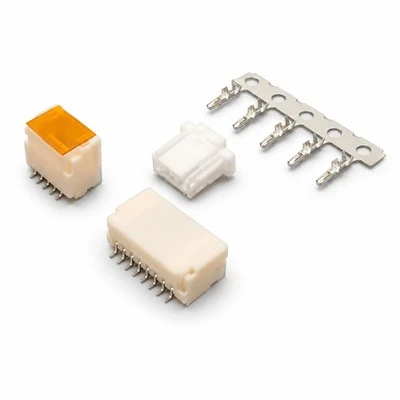
You know, LED connectors come in all shapes and sizes, and the color coding is like a secret language that helps electricians, installers, and even DIY enthusiasts figure out what’s what. Different colors are used to represent different functions or electrical polarities. It’s a simple yet effective way to ensure that everything is connected correctly and safely.
Let’s start with the basics. One of the most common color – coding schemes you’ll come across is for the power supply connections. In many cases, red is used to indicate the positive (+) terminal, and black is used for the negative (-) terminal. This is a standard that’s widely followed in the electrical industry. Just like when you’re dealing with a battery, you connect the red wire to the positive end and the black wire to the negative end. It’s a simple rule that helps prevent short – circuits and other electrical problems.
For example, if you’re installing a set of LED strip lights, you’ll usually see a red and a black wire coming out of the power adapter. You need to match the red wire from the adapter to the red wire on the LED strip (which is the positive connection), and the black wire from the adapter to the black wire on the strip. If you mix them up, the LEDs might not light up, or worse, you could damage the components.
But it’s not always just about red and black. In some more complex LED systems, there are other colors involved too. For instance, in RGB (Red, Green, Blue) LED connectors, you’ll have additional wires with different colors to control the different color channels. Usually, red is for the red color channel, green for the green channel, and blue for the blue channel. There might also be a white or yellow wire for the common ground or power return.
RGB LED systems are really cool because they allow you to create all sorts of different colors by mixing the three primary colors. But to get it right, you have to pay close attention to the color coding. If you connect the red wire to the green channel on the controller, you’re not gonna get the colors you want. It’s like a puzzle, and the color coding is the key to solving it.
Another thing to note is that sometimes, the color coding can vary depending on the manufacturer or the specific application. For example, some European manufacturers might use a different color scheme compared to their American counterparts. That’s why it’s always a good idea to check the product manual or datasheet that comes with the LED connectors. These documents will usually have a detailed explanation of the color coding and how to connect everything properly.
I remember one time, a customer came to me with a problem. They were trying to install a set of LED lights they bought from a different brand, and the colors didn’t seem to match what they were used to. They were really frustrated because they couldn’t figure out which wire was which. I told them to check the manual, and sure enough, the manufacturer had a slightly different color – coding system. Once they followed the instructions in the manual, everything worked perfectly.
Now, let’s talk about why this color coding system is so important. First of all, it improves safety. When you can clearly see which wire is positive and which is negative, you’re less likely to make mistakes that could lead to electrical shocks or fires. Second, it makes installation faster and easier. Instead of having to use a multimeter to test every wire, you can just follow the colors. This is especially important for professional installers who have to do a lot of jobs in a short period.
For DIYers, it makes the whole process a lot less intimidating. You don’t have to be an electrical expert to install LED lights. As long as you can follow the color – coding system, you can get the job done. It’s like having a map that guides you through the installation process.
But here’s the thing: even though the color coding is a great tool, it’s not foolproof. Sometimes, the wires might be mislabeled, or the colors might fade over time. That’s why it’s always a good idea to double – check your connections with a multimeter, especially if you’re working on a high – voltage or critical application.
As a LED connector supplier, I’ve seen firsthand how important it is for people to understand the color coding system. That’s why I’m always happy to help my customers with any questions they have. Whether you’re a seasoned professional or a beginner, I can provide you with the information you need to make sure your LED projects are a success.
If you’re in the market for high – quality LED connectors, don’t hesitate to reach out. I’ve got a wide range of products, from simple two – wire connectors to more complex RGB controllers. And I’m always here to offer advice on installation and troubleshooting. Whether you’re working on a small home project or a large commercial installation, I’ve got the right connectors for you.

So, if you think my LED connectors could be a good fit for your next project, just drop me a line. Let’s have a chat about your requirements, and I’m sure we can find a solution that works for you.
Automotive Connector References:
- Electrical Engineering textbooks on basic circuit connections
- Product manuals of various LED connector brands
Wenzhou JKUN Connector Co., Ltd.
Address: No.2667, Ningkang East Road, Yueqing City, Zhejiang Province, China
E-mail: sales@cnjkun.com
WebSite: https://www.jkunjcj.com/
