As a leading supplier of aluminium foil paper, I’m often asked about the production process behind this versatile product. Aluminium foil paper is everywhere in our daily lives, from food packaging to insulation materials. Understanding how it’s made can give you a deeper appreciation for its quality and functionality. So, let’s dive into the intriguing journey of aluminium foil paper from raw material to finished product. Aluminum Foil Paper
1. Bauxite Mining: The Starting Point
The production of aluminium foil paper begins with the extraction of bauxite, a sedimentary rock rich in aluminium hydroxide minerals. Bauxite mines can be found in various regions around the world, with the largest reserves located in Australia, Guinea, and Brazil. The mining process involves open – pit methods, where large trucks and excavators are used to remove the topsoil and access the bauxite ore.
Once the bauxite is mined, it is transported to a processing plant. Here, it undergoes a series of steps to extract pure aluminium oxide, also known as alumina. The most common method is the Bayer process. In the Bayer process, the bauxite is crushed, ground, and mixed with a hot sodium hydroxide solution. This mixture is then heated under high pressure, which causes the aluminium oxide in the bauxite to dissolve, forming sodium aluminate. Impurities are filtered out, and the sodium aluminate solution is cooled, allowing the aluminium hydroxide to precipitate. The aluminium hydroxide is then calcined at high temperatures to produce alumina.
2. Aluminium Smelting: From Alumina to Aluminium
After obtaining alumina, the next step is to convert it into pure aluminium through the electrolytic reduction process, known as the Hall – Héroult process. This process takes place in large smelters. Alumina is dissolved in a molten electrolyte, typically cryolite (Na₃AlF₆), in a large carbon – lined steel pot called a cell.
An electric current is passed through the electrolyte, causing the aluminium ions in the alumina to be reduced to metallic aluminium at the cathode. At the anode, oxygen is released, which reacts with the carbon anode to form carbon dioxide. The molten aluminium collects at the bottom of the cell and is periodically tapped off.
The aluminium produced through this process is of high purity, usually around 99%. However, for specific applications, small amounts of other elements such as copper, magnesium, or silicon may be added to form aluminium alloys, which can enhance the strength, corrosion resistance, or other properties of the final product.
3. Casting and Rolling: Shaping the Aluminium
Once the aluminium is smelted, it is cast into large ingots or billets. These ingots can weigh several tons and serve as the starting material for further processing. The casting process involves pouring the molten aluminium into molds of specific shapes and sizes.
After casting, the ingots are heated to a suitable temperature and then passed through a series of rolling mills. Rolling is a metalworking process that reduces the thickness of the aluminium and increases its length and width. The initial rolling passes, known as hot rolling, are carried out at high temperatures (usually above the recrystallization temperature of aluminium) to make the metal more malleable.
During hot rolling, the ingot is gradually reduced in thickness to form a thick aluminum sheet. This sheet is then further processed through cold rolling. Cold rolling is performed at room temperature and is used to achieve the final desired thickness and surface finish of the aluminium foil paper. Cold rolling also improves the mechanical properties of the aluminium, such as its strength and hardness.
4. Foil Rolling: Achieving the Desired Thickness
The cold – rolled aluminium sheet is then sent to a foil rolling mill for the production of aluminium foil. Foil rolling is a highly precise process that requires specialized equipment and skilled operators.
In the foil rolling mill, the aluminium sheet is passed through a series of rollers with decreasing gaps between them. This gradually reduces the thickness of the sheet to the desired foil thickness. Aluminium foil can be produced in a wide range of thicknesses, from very thin household foils (as thin as 0.006 mm) to thicker industrial foils.
To achieve extremely thin foils, a process called "double rolling" is often used. In double rolling, two sheets of aluminium are placed back – to – back and rolled together. After rolling, the two sheets are then separated, resulting in two very thin foils.
5. Annealing: Improving the Properties
After the foil is rolled to the desired thickness, it may undergo an annealing process. Annealing is a heat treatment process that involves heating the foil to a specific temperature and then slowly cooling it. This process helps to relieve internal stresses in the foil, improve its ductility, and enhance its formability.
The annealing process can also affect the surface properties of the foil. For example, it can reduce the surface roughness and improve the glossiness of the foil, which is important for applications such as food packaging, where a good appearance is required.
6. Surface Treatment and Coating
Depending on the intended application, the aluminium foil may undergo various surface treatments and coatings. For food packaging applications, the foil may be coated with a thin layer of lacquer or polymer to improve its barrier properties against moisture, oxygen, and light. This helps to extend the shelf life of the packaged food.
In some cases, the foil may be printed with labels, logos, or other information. Printing on aluminium foil can be achieved through various methods, such as flexographic printing or gravure printing.
For insulation applications, the foil may be laminated with other materials such as paper, plastic, or foam to enhance its insulating properties.
7. Quality Control and Inspection
Throughout the production process, strict quality control measures are implemented to ensure that the aluminium foil paper meets the required standards. Quality control starts from the raw materials, with bauxite and other additives being carefully tested for their chemical composition and purity.
During the rolling and foil – making processes, the thickness, width, and surface quality of the foil are continuously monitored. Various non – destructive testing methods, such as ultrasonic testing and eddy – current testing, can be used to detect any internal defects in the foil.
After the surface treatment and coating, the coated foil is tested for its adhesion strength, barrier properties, and print quality. Only foils that pass all the quality control tests are packaged and sent to customers.
8. Packaging and Distribution
Once the aluminium foil paper has passed the quality control checks, it is packaged for distribution. The packaging is designed to protect the foil from damage during transportation and storage. Common packaging materials include cardboard boxes, plastic films, and wooden pallets.
The packaged aluminium foil is then distributed to customers around the world. As a supplier, we have an efficient distribution network that ensures timely delivery of our products to our customers.
Why Choose Our Aluminium Foil Paper
At our company, we take pride in our state – of – the – art production facilities and strict quality control systems. Our aluminium foil paper is available in a wide range of thicknesses and sizes to meet the diverse needs of our customers. Whether you are in the food packaging industry, the construction industry, or any other industry that requires high – quality aluminium foil, we have the right product for you.

We also offer customized solutions. If you have specific requirements for the thickness, surface treatment, or coating of the aluminium foil, our team of experts can work with you to develop a product that meets your exact specifications.
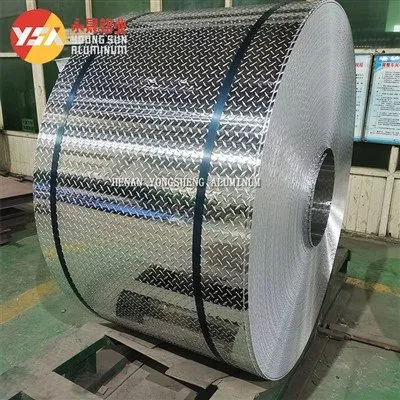
Embossed Aluminum Foil If you are interested in purchasing our aluminium foil paper, we encourage you to contact us for a detailed discussion. We are committed to providing you with the highest quality products and the best possible service. Our experienced sales team is ready to answer all your questions and help you make the right choice for your business. So don’t hesitate to reach out to us for a procurement negotiation. We look forward to working with you!
References
- ASM Handbook Committee, ASM Handbook, Volume 2: Properties and Selection: Non – Ferrous Alloys and Special – Purpose Materials. ASM International.
- D. G. Eskin, Aluminium Alloys: Structure and Properties. Butterworth – Heinemann.
- J. E. Hatch, Aluminum: Properties and Physical Metallurgy. American Society for Metals.
Henan Yongsheng Aluminum Industry Co., Ltd.
We are one of the most reliable aluminum foil paper manufacturers and suppliers in China. With abundant experience, we warmly welcome you to buy high-grade aluminum foil paper for sale here from our factory. All custom made products are with high quality and competitive price.
Address: Gongyi City Industrial Cluster District, Huiguo Town, Gongyi City, Henan Province
E-mail: eric@ysaluminum.cn
WebSite: https://www.ysaluminummill.com/
